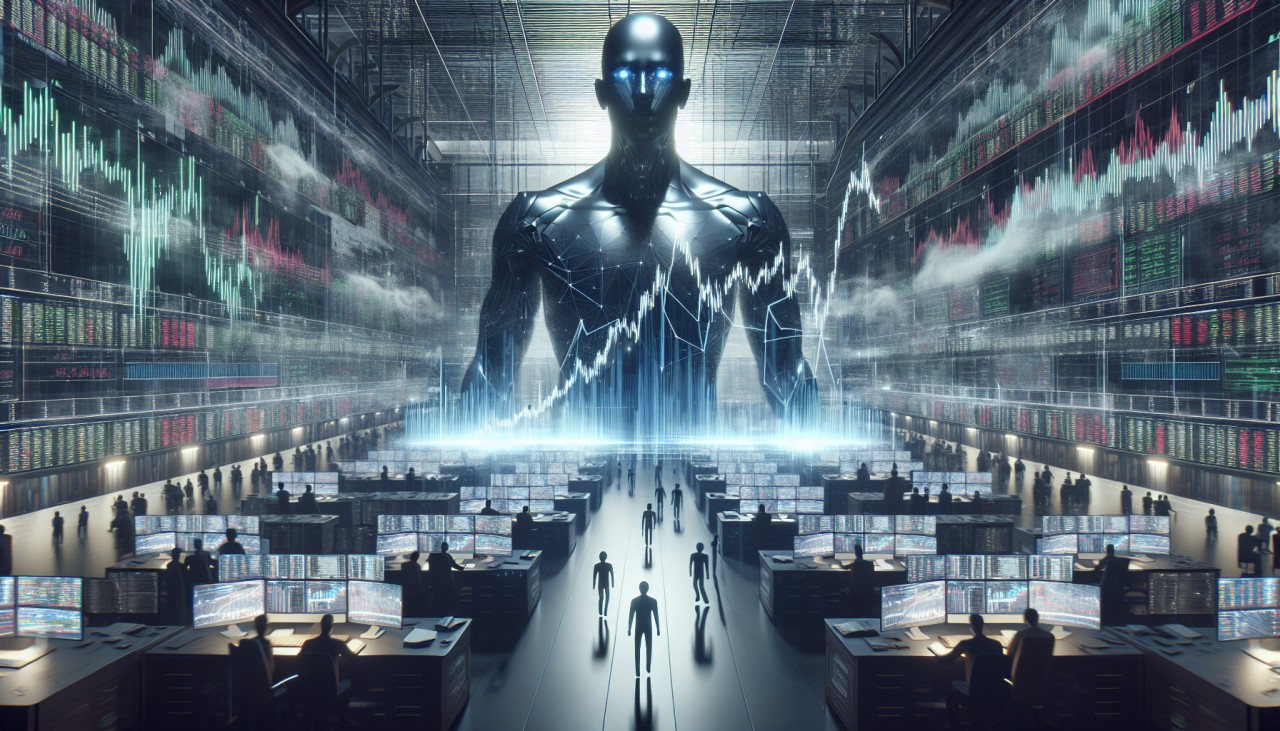
The integration of artificial intelligence (AI) into financial markets has ushered in a new era of trading, characterized by unprecedented speed and efficiency. AI algorithms can process vast amounts of data in milliseconds, executing trades at speeds far beyond human capability. This technological advancement has led to increased market liquidity and the democratization of trading strategies, allowing a broader range of participants to engage in complex trading activities. However, the rapid adoption of AI in trading has also introduced significant risks, particularly concerning flash crashes—sudden, severe market declines that can occur within minutes.
Flash crashes are not a new phenomenon. The most notable example is the "Flash Crash" of May 6, 2010, when the Dow Jones Industrial Average plummeted nearly 1,000 points (about 9%) within minutes, only to rebound almost as quickly. This event was partly attributed to high-frequency trading (HFT) algorithms that reacted to a large sell order by a mutual fund, amplifying the market's downward momentum. The U.S. Securities and Exchange Commission (SEC) and the Commodity Futures Trading Commission (CFTC) conducted an extensive investigation into the incident, concluding that the actions of high-frequency trading firms contributed to the volatility observed during the crash. en.wikipedia.org
The 2010 Flash Crash serves as a stark reminder of the potential dangers associated with algorithmic trading. AI-driven trading systems, while designed to enhance market efficiency, can inadvertently exacerbate market volatility. These systems often operate based on predefined algorithms that can lead to rapid, large-scale trades in response to market signals. In periods of market stress or unexpected events, such as economic downturns or geopolitical crises, these algorithms can trigger a cascade of sell-offs, leading to a rapid decline in asset prices. The speed and scale of these automated responses can overwhelm market participants and infrastructure, resulting in a flash crash.
One of the primary concerns with AI in trading is the lack of transparency in algorithmic decision-making processes. Many AI models, especially deep learning networks, are highly complex and operate as "black boxes," making it challenging for traders and regulators to fully understand how a particular trade or prediction was made. This opacity raises accountability and compliance issues, particularly during market disruptions. For instance, during the 2010 Flash Crash, the rapid and unexplained market movements were partly attributed to the lack of transparency in algorithmic trading strategies. jetir.org
Another significant risk is the phenomenon of overfitting in AI models. Overfitting occurs when an algorithm is trained extensively on historical data, leading it to perform exceptionally well on past data but poorly in new, unseen market conditions. This can result in AI models that are ill-equipped to handle real-world market dynamics, especially during periods of high volatility or market anomalies. The 2010 Flash Crash exemplifies how algorithms, optimized for historical data, can fail to adapt to sudden market changes, leading to catastrophic outcomes. jetir.org
The interconnectedness of global financial markets further amplifies the risks associated with AI-driven trading. High-frequency trading algorithms operate within highly interconnected global markets, and systemic risk can spread quickly if sell-offs are triggered simultaneously across multiple platforms. This interconnectedness can lead to rapid and widespread market disruptions, as observed during the 2010 Flash Crash, where the actions of a single large trader triggered a chain reaction of automated sell-offs, exacerbating the market decline. sites.lsa.umich.edu
Moreover, the reliance on AI in trading has raised concerns about market manipulation. Techniques such as spoofing and layering involve placing large orders to create a false impression of supply and demand, only to cancel them before execution. These deceptive practices can mislead other market participants and distort price movements. Regulators, including the SEC and the CFTC, have implemented strict policies and imposed heavy fines on traders caught engaging in these activities. However, sophisticated algorithms continue to find ways to exploit market inefficiencies, making regulatory oversight an ongoing challenge. propfirmplus.com
The lack of human oversight in AI-driven trading systems is another critical concern. Automated trading systems can execute trades autonomously based on predefined algorithms, with minimal intervention or supervision from human traders. This lack of human oversight can increase the potential for errors, misinterpretations, and unintended consequences, particularly in rapidly changing market conditions. For example, during the 2010 Flash Crash, automated trading algorithms exacerbated market volatility by executing trades without human oversight, contributing to a rapid and steep decline in stock prices before quickly rebounding. deeside.com
The rapid rise of AI in financial markets has also led to concerns about the potential for a "trading bot arms race." As more firms deploy advanced algorithms, these bots are essentially pitted against each other in a high-stakes game of one-upmanship. This competition can lead to unpredictable and potentially dangerous market behaviors, as algorithms react to each other's actions in real time. The lack of transparency and oversight in these systems further complicates the ability to predict and manage their impact on market stability. financialpress.in
In conclusion, while AI has the potential to enhance efficiency and liquidity in financial markets, its integration into trading systems introduces significant risks, particularly concerning flash crashes. The complexity, opacity, and rapid response capabilities of AI-driven trading systems can lead to unintended market disruptions, highlighting the need for robust regulatory frameworks, increased transparency, and enhanced oversight to mitigate these risks. As financial markets continue to evolve, it is imperative to balance the benefits of AI with the potential dangers it poses to market stability and investor confidence.
Key Takeaways
- AI-driven trading systems can exacerbate market volatility, leading to rapid declines in asset prices.
- Overfitting in AI models can result in poor performance under new market conditions, increasing the risk of flash crashes.
- The interconnectedness of global markets can amplify the impact of AI-driven trading, leading to widespread market disruptions.
- Lack of transparency in AI algorithms raises accountability and compliance issues, particularly during market disruptions.
- The absence of human oversight in AI trading systems can lead to unintended market consequences and increased systemic risk.