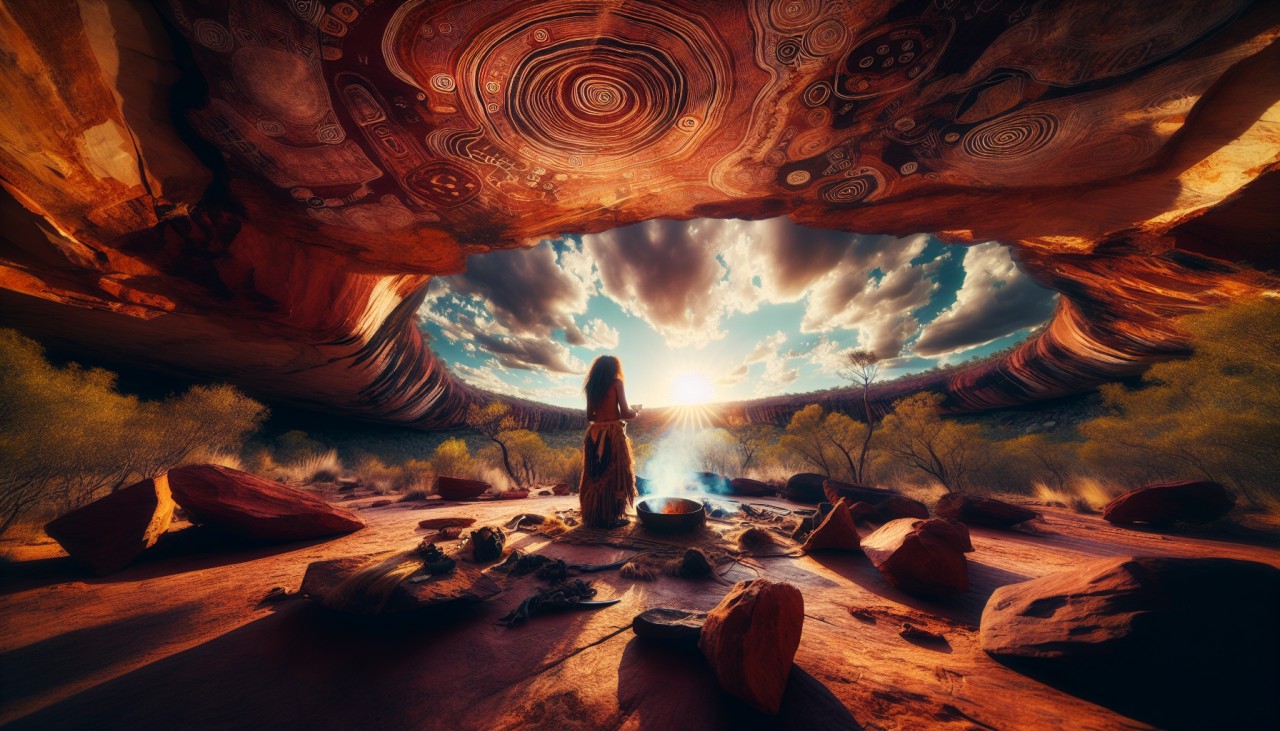
Aboriginal Dreamtime, or "The Dreaming," is a foundational concept in Aboriginal Australian culture, representing the time when ancestral spirits traversed the land, shaping its features and establishing the laws of existence. This period is not confined to the past but is considered an ongoing, ever-present reality that influences the present and future. Central to Dreamtime is the belief that the land, its features, and all living beings are interconnected, each holding a unique story and significance. This interconnectedness forms the basis of Aboriginal healing practices, which are deeply embedded in the cultural and spiritual fabric of the community.
One of the most profound aspects of Aboriginal healing is the role of the Ngangkari, traditional healers of the Anangu people. Ngangkari are entrusted with the responsibility of maintaining the physical, emotional, and spiritual well-being of their communities. Their healing practices are multifaceted, involving spiritual rituals, the use of bush medicines, and a deep connection to the land. The Ngangkari's knowledge is often passed down through generations, ensuring the continuity of cultural practices and the preservation of traditional healing methods. Their approach to healing is holistic, addressing not only the symptoms of illness but also the underlying spiritual and emotional factors that contribute to health issues. This comprehensive approach underscores the importance of cultural context in understanding and treating health conditions within Aboriginal communities.
The significance of Dreamtime in healing is also evident in the practice of Awelye, a ceremonial tradition involving body painting, song, dance, and storytelling. Awelye is primarily practiced by women of the Anmatyerre and Alyawarr nations in Central Australia. This practice serves as a medium for expressing cultural identity, transmitting knowledge, and maintaining spiritual connections. Through Awelye, women honor their totems, recount Dreamtime stories, and reinforce kinship bonds. The act of body painting, in particular, is a form of storytelling, with each design symbolizing specific narratives and ancestral connections. This form of expression not only preserves cultural heritage but also serves as a therapeutic practice, promoting mental and emotional well-being by fostering a sense of identity and belonging.
Another integral component of Aboriginal healing is the concept of Songlines, also known as dreaming tracks. These are paths across the land that mark the routes followed by ancestral beings during the Dreamtime. Songlines are recorded in traditional song cycles, stories, dance, and art, serving as a map of the land and a repository of cultural knowledge. They guide individuals through the landscape, teaching them about the environment, resources, and the laws of the land. Walking along these Songlines is not only a physical journey but also a spiritual one, connecting individuals to their ancestors and the Dreamtime. This practice reinforces the bond between people and the land, promoting a sense of purpose and belonging.
The integration of traditional Aboriginal healing practices with Western medicine has been a subject of increasing interest and research. Studies have shown that incorporating cultural therapeutic ways into healthcare services can lead to improved health outcomes for Aboriginal people. For instance, a systematic scoping review published in the American Journal of Community Psychology highlighted the effectiveness of culturally specific healing practices in addressing mental health issues within Aboriginal communities. The review emphasized the importance of trauma awareness, self-determination, and the use of traditional healing methods in promoting well-being. This research underscores the value of cultural competence in healthcare and the need for services that are responsive to the unique needs of Aboriginal populations.
Incorporating Aboriginal healing practices into daily life can offer valuable insights into holistic well-being. One practical approach is to engage in mindfulness and meditation techniques inspired by Aboriginal traditions. Practices such as Dadirri, a term from the Ngangkari language meaning "deep listening," involve quiet reflection and connection to the land. Setting aside time each day for quiet reflection, perhaps in a natural setting, can help individuals connect with their inner selves and the environment, fostering a sense of peace and balance. Additionally, learning about and respecting the cultural significance of local landscapes and sacred sites can deepen one's appreciation for the interconnectedness of all beings and promote a sense of responsibility toward environmental stewardship.
Key Takeaways
- Ngangkari healers play a vital role in maintaining the holistic well-being of Aboriginal communities.
- Awelye ceremonies serve as a medium for cultural expression and mental health promotion.
- Songlines act as spiritual maps, connecting individuals to their ancestors and the land.
- Integrating traditional healing practices with Western medicine can enhance health outcomes for Aboriginal people.
- Mindfulness practices inspired by Aboriginal traditions can promote holistic well-being.
Example
To incorporate the principles of Aboriginal healing into your daily life, consider setting aside time each day for quiet reflection in a natural setting. This practice can help you connect with your inner self and the environment, fostering a sense of peace and balance. Additionally, learning about and respecting the cultural significance of local landscapes and sacred sites can deepen your appreciation for the interconnectedness of all beings and promote a sense of responsibility toward environmental stewardship.