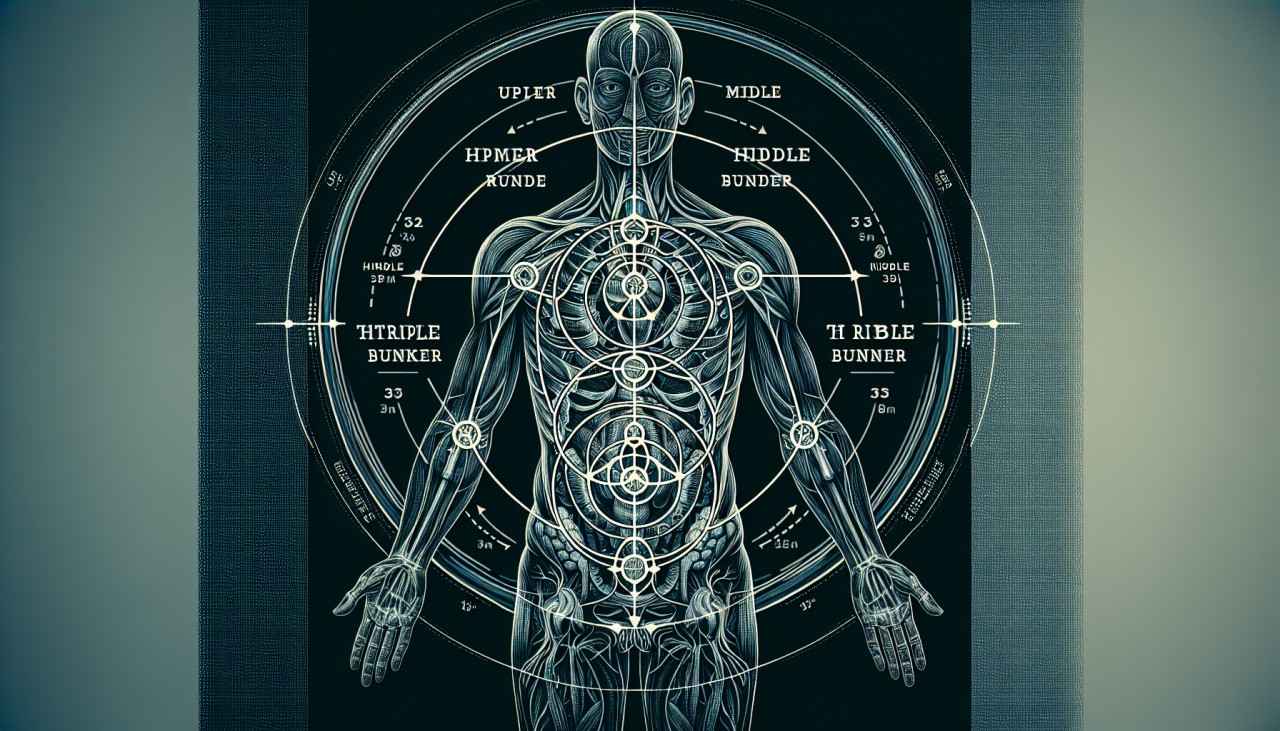
In the intricate tapestry of Traditional Chinese Medicine (TCM), the concept of the Triple Burner, or San Jiao, stands out as a pivotal yet often enigmatic element. Unlike the well-defined organs recognized in Western medicine, the Triple Burner doesn't correspond to a specific anatomical structure. Instead, it represents a functional system that harmonizes the body's internal processes, ensuring the seamless flow of Qi (vital energy) and the balanced distribution of fluids. This system is traditionally divided into three regions: the Upper Burner, Middle Burner, and Lower Burner, each overseeing distinct physiological functions.
The Upper Burner, often likened to a mist, encompasses the chest area, including the heart and lungs. Its primary role is to facilitate the distribution of Qi and fluids to the upper parts of the body, ensuring proper respiration and circulation. The Middle Burner, compared to foam, spans the area from the diaphragm to the navel, involving the stomach, spleen, and liver. This region is central to digestion, transforming food into Qi and blood, and distributing nutrients throughout the body. The Lower Burner, resembling a drain, includes the area below the navel, encompassing the kidneys, bladder, intestines, and reproductive organs. It is responsible for the elimination of waste and the regulation of water metabolism, maintaining the body's internal balance.
Understanding the Triple Burner offers valuable insights into maintaining health and preventing disease. When the Triple Burner functions optimally, the body's systems operate in harmony, leading to overall well-being. However, disruptions in this system can manifest as various health issues, such as digestive disorders, respiratory problems, or urinary difficulties. For instance, a blockage in the Upper Burner may result in symptoms like chest tightness or breathing difficulties, while an imbalance in the Lower Burner could lead to issues like edema or frequent urination.
Recent studies have begun to bridge the gap between TCM concepts and Western medical understanding. Notably, the discovery of the interstitium—a network of fluid-filled spaces within tissues—has been proposed as a physical counterpart to the Triple Burner. This finding suggests that the interstitium may play a role in fluid distribution and Qi flow, aligning with the functions attributed to the Triple Burner in TCM. Such interdisciplinary research underscores the relevance of traditional concepts in contemporary health science.
Incorporating practices that support the Triple Burner can enhance overall health. Acupuncture points along the Triple Burner meridian, such as San Jiao 5 (Waiguan), are commonly used to clear heat, release exterior pathogens, and regulate Qi flow, particularly in conditions involving alternating chills and fever or fluid retention. Additionally, lifestyle recommendations may include maintaining a balanced diet to support digestion, engaging in regular physical activity to promote Qi circulation, and managing stress to prevent Qi stagnation. Herbal treatments may also be prescribed to support the Triple Burner’s role in harmonizing the body’s three burners and maintaining balance between internal and external energies.
Understanding the Triple Burner provides a holistic framework for health, emphasizing the interconnectedness of the body's systems. By recognizing and nurturing this system, individuals can achieve a more balanced and harmonious state of health.
Incorporating practices that support the Triple Burner can enhance overall health. Acupuncture points along the Triple Burner meridian, such as San Jiao 5 (Waiguan), are commonly used to clear heat, release exterior pathogens, and regulate Qi flow, particularly in conditions involving alternating chills and fever or fluid retention. Additionally, lifestyle recommendations may include maintaining a balanced diet to support digestion, engaging in regular physical activity to promote Qi circulation, and managing stress to prevent Qi stagnation. Herbal treatments may also be prescribed to support the Triple Burner’s role in harmonizing the body’s three burners and maintaining balance between internal and external energies.
Key Takeaways
- The Triple Burner (San Jiao) is a functional system in TCM, not a specific anatomical organ.
- It comprises three regions: Upper, Middle, and Lower Burners, each overseeing distinct physiological functions.
- Understanding the Triple Burner offers insights into maintaining health and preventing disease.
- Recent studies suggest the interstitium may correspond to the Triple Burner in Western anatomy.
- Practices supporting the Triple Burner include acupuncture, balanced diet, physical activity, and stress management.
Example
To support the Triple Burner in your daily life, consider incorporating practices that promote Qi circulation and balance. Engaging in regular physical activity, such as yoga or tai chi, can enhance Qi flow and harmonize the body's systems. Maintaining a balanced diet rich in whole foods supports digestion and fluid metabolism. Managing stress through mindfulness techniques, like meditation or deep breathing exercises, can prevent Qi stagnation and promote overall well-being. Additionally, consulting with a qualified TCM practitioner for personalized acupuncture treatments can further support the Triple Burner and overall health.