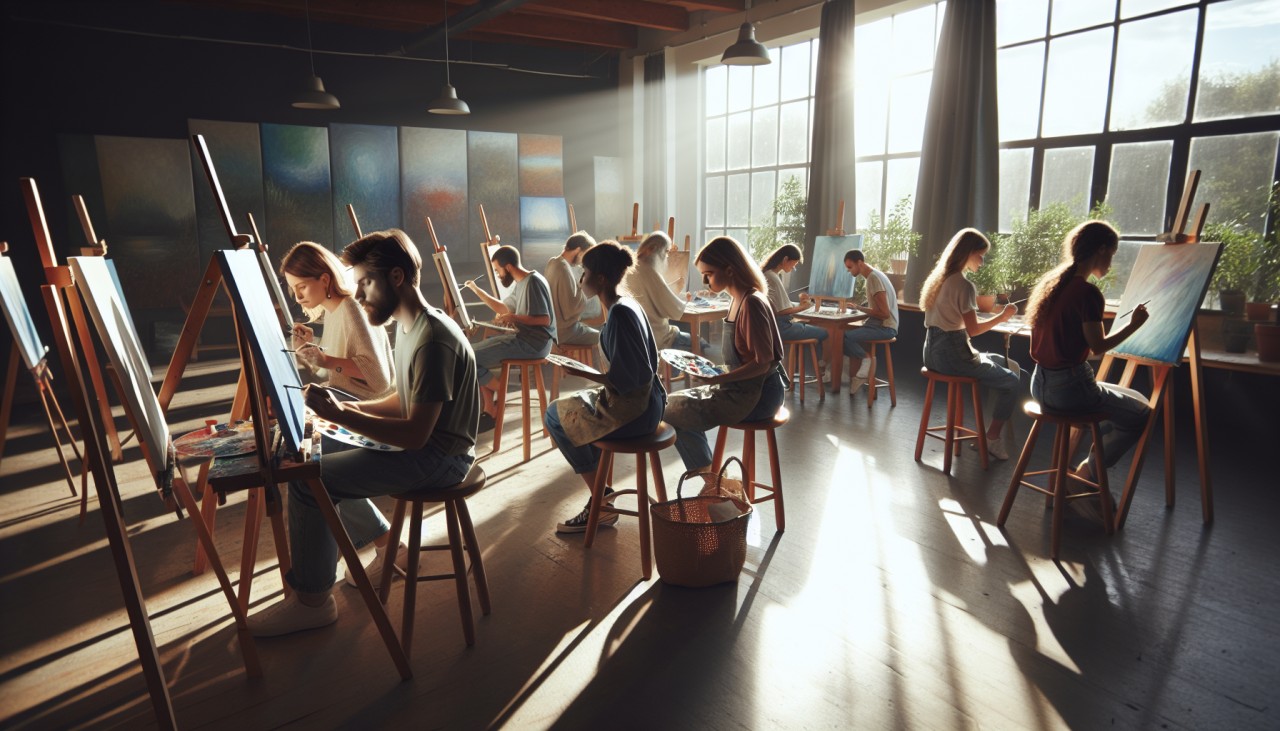
Art therapy has long been recognized as a valuable tool for promoting mental well-being, but recent advancements have expanded its reach and effectiveness. This therapeutic approach combines the creative process of making art with psychological theory to improve mental health. It's not about creating masterpieces; rather, it's about the journey of self-expression and the therapeutic benefits that arise from it. Recent studies have highlighted the profound impact art therapy can have on various populations, from children and adolescents to adults facing chronic illnesses.
One notable area where art therapy has shown significant promise is in the treatment of anxiety and depression among women with breast cancer. A comprehensive meta-analysis encompassing 17 trials with over 1,200 participants found that art therapy significantly reduced anxiety and depression levels in this group. The study reported a Cohen's delta of -1.594 for anxiety and -0.771 for depression, indicating a substantial therapeutic effect. These findings suggest that integrating art therapy into cancer care can provide a holistic approach to managing the psychological challenges associated with the disease. sciencedirect.com
Similarly, art therapy has been effective in alleviating psychological distress among children and adolescents with cancer. A systematic review and meta-analysis of eight studies revealed that art therapy positively impacted anxiety, depression, overall psychological symptoms, stress, and anger in this population. The therapeutic process allows young patients to express complex emotions in a non-verbal manner, facilitating emotional processing and reducing psychological distress. pmc.ncbi.nlm.nih.gov
Beyond cancer care, art therapy has been beneficial in various settings, including prisons. A systematic review of 12 studies involving inmates with mental illnesses found that art therapy led to improvements in socialization, reduced anxiety and depressive symptoms, and decreased recidivism rates. The creative process offers inmates a constructive outlet for expression, promoting mental well-being and aiding in rehabilitation efforts. pubmed.ncbi.nlm.nih.gov
The effectiveness of art therapy is not limited to specific populations. A meta-analysis involving 19 randomized controlled trials with 1,338 clinical nurses demonstrated that art therapy significantly reduced anxiety, depression, and perceived stress levels among healthcare professionals. This underscores the importance of supporting the mental health of those who care for others, highlighting art therapy as a valuable tool in occupational health. pubmed.ncbi.nlm.nih.gov
These studies collectively highlight the versatility and effectiveness of art therapy across diverse populations and settings. The therapeutic benefits of engaging in creative expression are profound, offering a non-verbal outlet for emotions, reducing psychological distress, and enhancing overall well-being. As research continues to evolve, art therapy is poised to become an integral component of holistic healthcare approaches.
Incorporating art therapy into daily life can be a simple yet effective way to enhance mental well-being. One practical approach is to set aside time each day for a creative activity, such as drawing, painting, or even crafting. This doesn't require any prior artistic skill; the focus should be on the process of creation rather than the end product. Engaging in such activities can serve as a form of mindfulness, helping to reduce stress and promote relaxation.
For those interested in exploring art therapy further, several resources and tools are available. Online platforms offer virtual art therapy sessions, providing access to professional guidance from the comfort of home. Additionally, numerous apps are designed to facilitate creative expression, offering tutorials and prompts to inspire daily artistic endeavors. Establishing a routine that includes creative activities can foster a sense of accomplishment and contribute to improved mental health.
Key Takeaways
- Art therapy significantly reduces anxiety and depression in women with breast cancer.
- Children and adolescents with cancer benefit from art therapy in managing psychological distress.
- Inmates with mental illnesses show improved socialization and reduced recidivism through art therapy.
- Clinical nurses experience decreased anxiety, depression, and stress levels via art therapy.
- Engaging in daily creative activities can enhance mental well-being and reduce stress.
Example
Incorporating a daily art therapy practice can be as simple as dedicating 15 minutes each day to sketching or painting. This routine can serve as a form of mindfulness, helping to reduce stress and promote relaxation. For those interested in exploring art therapy further, online platforms offer virtual sessions, and various apps provide tutorials and prompts to inspire daily artistic endeavors.