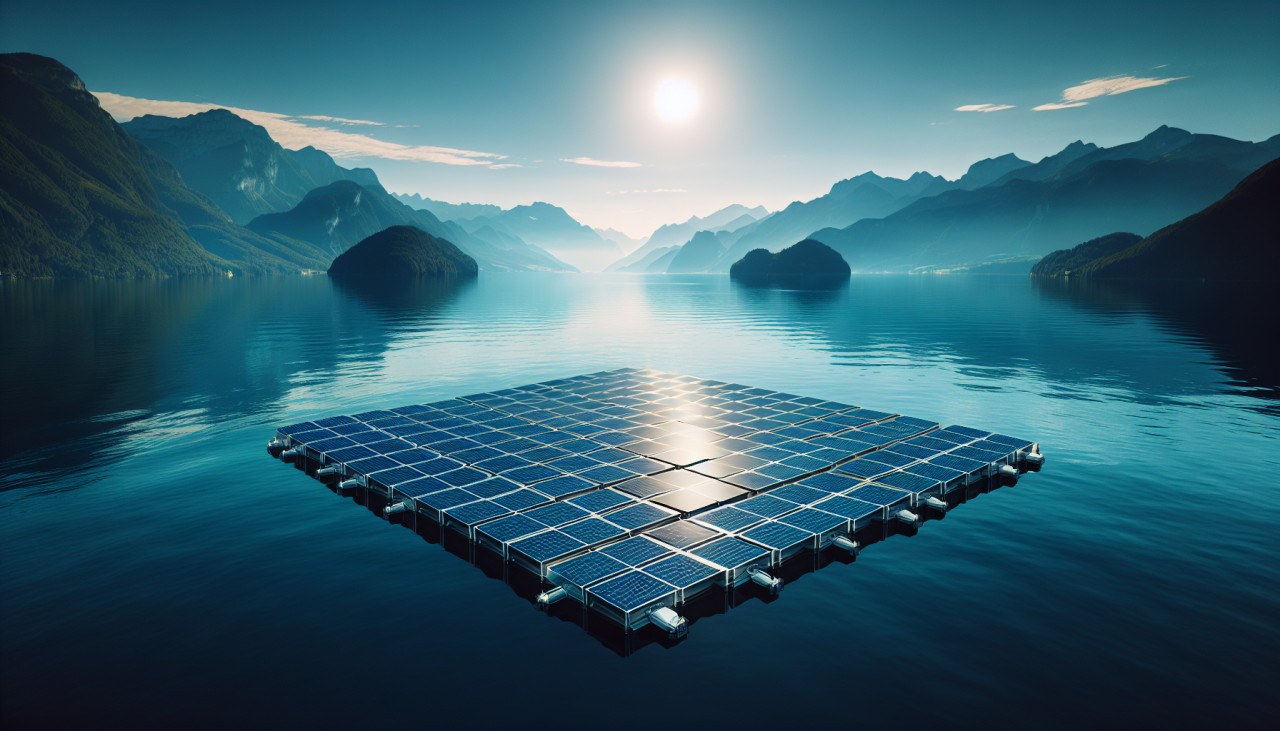
Floating solar farms, also known as floating photovoltaic (FPV) systems, are an innovative approach to harnessing solar energy by installing solar panels on bodies of water such as lakes, reservoirs, and oceans. This method offers several unique advantages over traditional land-based solar installations, including land conservation, improved panel efficiency due to water cooling, and the potential to reduce water evaporation. As the global demand for renewable energy continues to rise, floating solar farms are emerging as a promising solution to meet energy needs while preserving valuable land resources.
The concept of floating solar farms has gained significant traction in recent years, particularly in regions where land availability is limited or where land use conflicts are a concern. For instance, in Asia-Pacific, countries like China, India, Japan, and South Korea have been at the forefront of deploying floating solar systems on reservoirs and hydropower dams. These installations not only generate clean energy but also help in reducing water evaporation, which is particularly beneficial in arid regions. According to a study, floating solar photovoltaics could generate approximately 1,302 terawatt-hours (TWh) per year worldwide if implemented on just 10% of suitable water bodies. Major contributors to this potential include China (252 TWh), Brazil (170 TWh), and the United States (153 TWh). In smaller countries, FPV could satisfy most or all national electricity demand, including Papua New Guinea, Ethiopia, and Rwanda. en.wikipedia.org
Technological advancements have played a crucial role in the rapid development of floating solar farms. Innovations in materials, buoyancy systems, and anchoring mechanisms have enhanced the resilience and efficiency of these installations. For example, the integration of solar tracking systems allows panels to follow the sun's movement throughout the day, optimizing energy capture and increasing overall efficiency. This trend is particularly beneficial in regions with varying sunlight angles, making floating solar installations more competitive with traditional land-based systems. verifiedmarketreports.com
The economic viability of floating solar farms has also improved, with costs decreasing as the technology matures. The global floating solar panels market is projected to be valued at US$ 6.2 billion in 2025 and is expected to reach US$ 26 billion by 2032, expanding at a strong compound annual growth rate (CAGR) of 22.7% during 2025-2032. This growth is driven by the need to optimize unused water bodies for clean energy production and the increasing number of installations worldwide. fairfieldmarketresearch.com
Despite these advancements, challenges remain in the widespread adoption of floating solar farms. High initial installation costs, complex anchoring systems, and environmental permitting processes can delay project execution. Additionally, the long-term durability of these systems in extreme weather conditions is a concern that requires ongoing research and development. However, the potential benefits, including land conservation, improved energy efficiency, and the ability to generate renewable energy in areas with limited land availability, make floating solar farms a compelling option for the future of sustainable energy.
The environmental impact of floating solar farms is a topic of ongoing research and discussion. On one hand, these installations can act as artificial reefs, providing habitats for fish and other aquatic life. On the other hand, the panels increase shading, which may disrupt seagrass and coral ecosystems. A study published in the journal "Solar Energy" in May 2021 examined the environmental impacts and benefits of marine floating solar systems. The researchers found that while floating solar farms can provide ecological benefits, careful consideration and planning are necessary to mitigate potential negative effects on marine environments. en.wikipedia.org
In terms of global market trends, the floating solar PV market is experiencing significant growth. In 2025, the global floating solar PV market size is estimated at USD 6.9 billion. By 2035, it is projected to reach USD 41 billion, reflecting robust expansion across utility-scale and commercial applications. This growth is supported by continuous innovation in floating platform design, improved durability of photovoltaic modules in humid environments, and declining balance-of-system costs. altenergymag.com
Regional performance highlights indicate that Asia Pacific remains the dominant force in the floating solar PV market and is expected to hold the highest share of 52.4% by the end of 2035. Countries such as China, India, Japan, South Korea, and Southeast Asian nations are rapidly deploying floating solar on reservoirs and hydropower dams to maximize renewable output without consuming agricultural land. These technological breakthroughs are making floating solar PV more reliable and financially attractive for investors. altenergymag.com
Corporate sustainability and land conservation initiatives are also driving the adoption of floating solar PV. As corporations commit to net-zero targets, floating solar PV is increasingly being adopted to overcome land acquisition challenges. Industrial facilities, mining sites, water treatment plants, and agricultural irrigation ponds are becoming prime locations for floating solar installations. This shift aligns renewable energy expansion with land preservation efforts, addressing community concerns about land use conflicts while delivering measurable environmental benefits. altenergymag.com
Digitalization and smart monitoring of floating solar assets are gaining traction in floating solar PV projects. Operators are adopting real-time analytics to track panel performance, detect faults, and optimize energy yield remotely. Smart monitoring reduces operational downtime and extends system lifespans, making floating solar farms increasingly attractive for utility operators seeking predictable long-term returns. altenergymag.com
In conclusion, floating solar farms represent a promising and innovative approach to generating renewable energy by utilizing water bodies. They offer unique advantages such as land conservation, improved panel efficiency, and the potential to reduce water evaporation. While challenges remain, ongoing technological advancements and supportive market trends indicate a bright future for floating solar farms in the global energy landscape.
Key Takeaways
- Floating solar farms are gaining popularity due to land conservation and improved efficiency.
- Technological advancements, including solar tracking systems, enhance energy capture.
- The global floating solar PV market is projected to reach USD 41 billion by 2035.
- Asia Pacific leads the market, with China, India, Japan, and South Korea at the forefront.
- Corporate sustainability initiatives and smart monitoring are driving adoption.