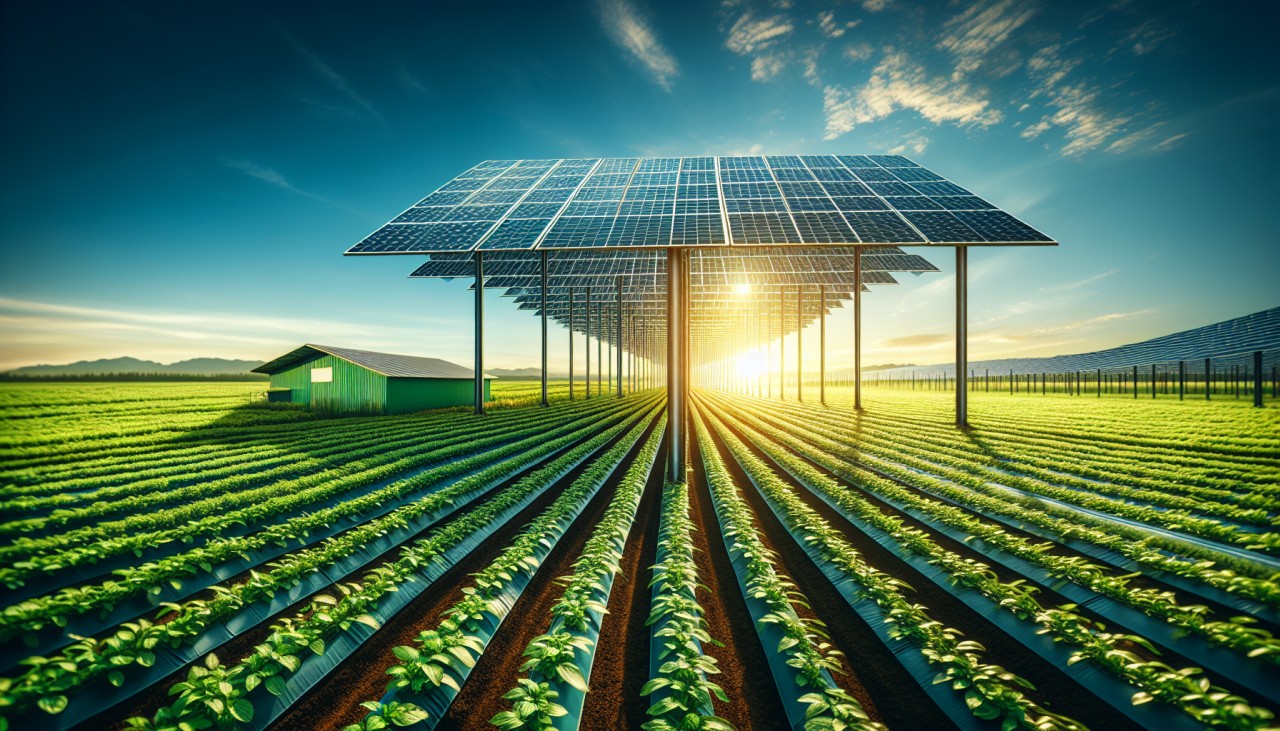
Agrivoltaics, the practice of co-locating solar photovoltaic (PV) systems with agricultural activities, is emerging as a transformative solution to the pressing challenges of land scarcity and climate change. By harnessing the sun's energy for electricity generation while simultaneously cultivating crops beneath the solar panels, agrivoltaics offers a dual-purpose land use that maximizes productivity and sustainability. This innovative approach not only addresses the growing global demand for renewable energy but also supports agricultural practices by providing shade, reducing water evaporation, and mitigating heat stress on plants. Recent studies and pilot projects worldwide have demonstrated the viability and benefits of agrivoltaic systems, paving the way for their broader adoption.
In the United States, agrivoltaics is gaining momentum, with over 500 active sites contributing approximately 9 gigawatts (GW) of solar capacity to the grid as of January 2025. en.wikipedia.org These projects span various agricultural settings, from large-scale farms to community gardens, illustrating the versatility of agrivoltaic applications. For instance, in New York, Cornell University's Agrivoltaics Research Program is exploring the integration of solar panels with crop cultivation, aiming to balance energy production with agricultural needs. news.cornell.edu Similarly, in Iowa, a four-year study at a 10-acre solar site near Ames has shown that certain vegetables can thrive under solar panels, with partial shade reducing heat and drought stress. axios.com These examples underscore the potential of agrivoltaics to enhance food security while advancing renewable energy goals.
Internationally, agrivoltaics is also making significant strides. In Italy, researchers have developed a comprehensive simulation framework to optimize agrivoltaic systems in open-field configurations. pv-magazine.com This integrated approach allows for the concurrent analysis of design parameters impacting both crop and energy performance, facilitating the development of efficient agrivoltaic systems. Additionally, a study by the University of Bonn found that agrivoltaic systems, where solar panels are installed over agricultural land, enjoy higher public acceptance compared to traditional solar parks. sciencedaily.com This finding highlights the potential for agrivoltaics to gain widespread support as a sustainable land-use strategy.
The benefits of agrivoltaics extend beyond energy and crop production. The shading provided by solar panels can lead to cooler soil temperatures, reducing water evaporation and improving soil moisture retention. This effect is particularly advantageous in arid regions where water conservation is critical. Moreover, the integration of solar panels with agricultural practices can enhance biodiversity. For example, in the U.S. Midwest, agrivoltaic sites have been established as official monarch butterfly waystations, reversing decades of habitat loss through milkweed plantings under panels. energycentral.com Such initiatives demonstrate how agrivoltaics can contribute to ecological conservation efforts while supporting agricultural productivity.
However, the successful implementation of agrivoltaic systems requires careful consideration of various factors, including crop selection, panel configuration, and local environmental conditions. Research is ongoing to identify optimal combinations that maximize both energy and agricultural yields. For instance, a study by the University of Illinois Urbana-Champaign examined how shading in agrivoltaic systems influences sorghum and soybean grain yields, focusing on physiological mechanisms governing grain weight during grain filling. pv-magazine-usa.com Such research provides valuable insights into the complexities of integrating solar energy with crop cultivation and informs best practices for agrivoltaic system design.
In conclusion, agrivoltaics represents a promising avenue for achieving sustainable land use by simultaneously generating renewable energy and supporting agricultural production. The growing body of research and successful pilot projects worldwide highlight the feasibility and advantages of this approach. As technology advances and more data becomes available, agrivoltaics is poised to play a significant role in addressing global challenges related to energy production, food security, and environmental conservation.
Key Takeaways
- Agrivoltaics integrates solar panels with agriculture, enabling dual land use for energy and crop production.
- In the U.S., over 500 agrivoltaic sites contribute approximately 9 GW of solar capacity as of January 2025.
- International studies, such as those in Italy and Germany, demonstrate the viability and public acceptance of agrivoltaic systems.
- Agrivoltaics offers environmental benefits, including enhanced biodiversity and improved soil moisture retention.
- Ongoing research focuses on optimizing agrivoltaic systems for various crops and environmental conditions.