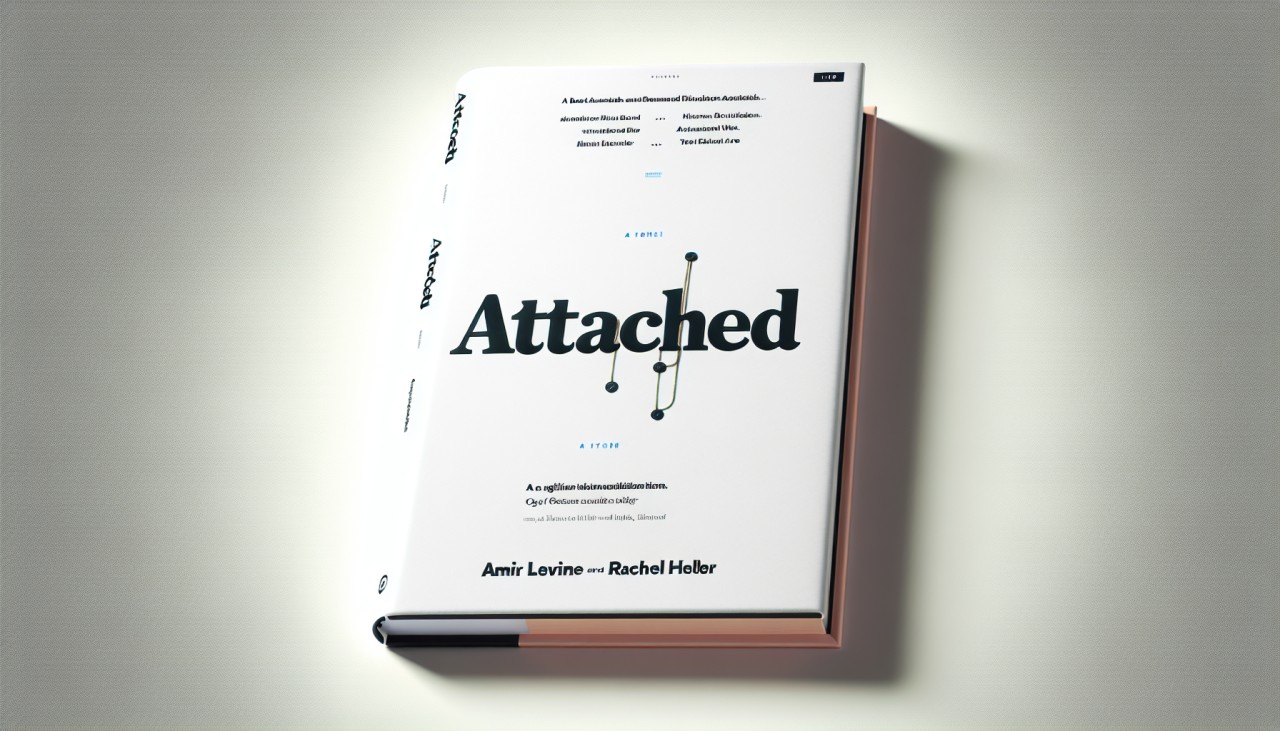
In "Attached," Amir Levine and Rachel Heller present a compelling exploration of adult attachment theory, a concept that has significantly influenced our understanding of romantic relationships. Rooted in the pioneering work of psychologist John Bowlby, attachment theory posits that the bonds formed in early life with caregivers profoundly impact our interactions and connections in adulthood. Levine and Heller aim to demystify these patterns, offering readers a framework to comprehend their behaviors and emotions within romantic contexts.
The authors categorize individuals into three distinct attachment styles:
- Anxious Attachment: Individuals with this style often find themselves preoccupied with their relationships, seeking constant reassurance and fearing abandonment.
- Avoidant Attachment: Those exhibiting this style value their independence and may struggle with intimacy, often distancing themselves when relationships become too close.
- Secure Attachment: Individuals with a secure attachment style are comfortable with intimacy, balanced in their need for closeness and independence, and generally have healthy, stable relationships.
Understanding these styles is crucial, as they influence how we perceive and respond to our partners' behaviors and needs. For instance, an anxious individual might misinterpret a partner's need for space as a sign of disinterest, leading to unnecessary anxiety and potential conflict. Conversely, an avoidant person might view their partner's desire for closeness as a threat to their autonomy, resulting in withdrawal or emotional distance.
Levine and Heller emphasize that these attachment styles are not fixed traits but rather patterns that can evolve with self-awareness and effort. They provide readers with tools to identify their own attachment styles and those of their partners, fostering empathy and understanding. This awareness is the first step toward breaking negative cycles and building more secure, fulfilling relationships.
The book is rich with practical advice, including self-assessment quizzes, communication strategies, and case studies that illustrate how different attachment styles manifest in real-life scenarios. For example, they discuss the common anxious-avoidant dynamic, where an anxious partner's pursuit of closeness can trigger an avoidant partner's withdrawal, creating a cycle of pursuit and distance. Recognizing this pattern allows couples to address the underlying issues and work toward a more balanced connection.
One of the strengths of "Attached" is its accessibility. Levine and Heller translate complex psychological theories into language that is easy to understand, making the book suitable for a wide audience. They also acknowledge the diversity of human experiences, noting that while attachment styles provide a useful framework, they are not exhaustive or deterministic. This nuanced approach encourages readers to view their behaviors and those of their partners with compassion and a desire for growth.
However, some critics have pointed out that the book's focus is primarily on monogamous, heterosexual relationships, which may not resonate with all readers. Additionally, the portrayal of avoidant individuals as emotionally distant or cold has been noted as potentially oversimplified. It's important to recognize that attachment behaviors are complex and can vary widely among individuals.
In conclusion, "Attached" offers valuable insights into the science of adult attachment and provides practical tools for improving romantic relationships. By understanding and addressing our attachment patterns, we can foster deeper connections and create more secure, loving partnerships.
In "Attached," Amir Levine and Rachel Heller delve into the intricate science of adult attachment, offering readers a comprehensive guide to understanding how early life experiences shape our romantic relationships. Building upon the foundational work of psychologist John Bowlby, the authors explore the profound impact that the bonds formed with caregivers during childhood have on our interactions and connections in adulthood. They aim to demystify these patterns, providing a framework that enables individuals to comprehend their behaviors and emotions within romantic contexts.
The book introduces three distinct attachment styles:
- Anxious Attachment: Individuals with this style often find themselves preoccupied with their relationships, seeking constant reassurance and fearing abandonment.
- Avoidant Attachment: Those exhibiting this style value their independence and may struggle with intimacy, often distancing themselves when relationships become too close.
- Secure Attachment: Individuals with a secure attachment style are comfortable with intimacy, balanced in their need for closeness and independence, and generally have healthy, stable relationships.
Understanding these styles is crucial, as they influence how we perceive and respond to our partners' behaviors and needs. For instance, an anxious individual might misinterpret a partner's need for space as a sign of disinterest, leading to unnecessary anxiety and potential conflict. Conversely, an avoidant person might view their partner's desire for closeness as a threat to their autonomy, resulting in withdrawal or emotional distance.
Levine and Heller emphasize that these attachment styles are not fixed traits but rather patterns that can evolve with self-awareness and effort. They provide readers with tools to identify their own attachment styles and those of their partners, fostering empathy and understanding. This awareness is the first step toward breaking negative cycles and building more secure, fulfilling relationships.
The book is rich with practical advice, including self-assessment quizzes, communication strategies, and case studies that illustrate how different attachment styles manifest in real-life scenarios. For example, they discuss the common anxious-avoidant dynamic, where an anxious partner's pursuit of closeness can trigger an avoidant partner's withdrawal, creating a cycle of pursuit and distance. Recognizing this pattern allows couples to address the underlying issues and work toward a more balanced connection.
One of the strengths of "Attached" is its accessibility. Levine and Heller translate complex psychological theories into language that is easy to understand, making the book suitable for a wide audience. They also acknowledge the diversity of human experiences, noting that while attachment styles provide a useful framework, they are not exhaustive or deterministic. This nuanced approach encourages readers to view their behaviors and those of their partners with compassion and a desire for growth.
However, some critics have pointed out that the book's focus is primarily on monogamous, heterosexual relationships, which may not resonate with all readers. Additionally, the portrayal of avoidant individuals as emotionally distant or cold has been noted as potentially oversimplified. It's important to recognize that attachment behaviors are complex and can vary widely among individuals.
In conclusion, "Attached" offers valuable insights into the science of adult attachment and provides practical tools for improving romantic relationships. By understanding and addressing our attachment patterns, we can foster deeper connections and create more secure, loving partnerships.
Key Takeaways
- Understanding adult attachment theory can enhance romantic relationships.
- There are three primary attachment styles: anxious, avoidant, and secure.
- Self-awareness of one's attachment style is the first step toward healthier relationships.
- Recognizing attachment patterns can help break negative cycles in relationships.
- Practical tools, such as self-assessment quizzes and communication strategies, are provided.
- Attachment styles are not fixed traits but can evolve with effort and understanding.
- The book is accessible and suitable for a wide audience.
- Critics note a focus on monogamous, heterosexual relationships and potential oversimplification of avoidant behaviors.
Example
Consider a scenario where an individual with an anxious attachment style feels distressed when their partner doesn't respond promptly to a text message. This reaction stems from a deep-seated fear of abandonment. By recognizing this pattern, the individual can work on self-soothing techniques and communicate their needs to their partner in a healthy manner, reducing unnecessary anxiety and fostering a more secure relationship dynamic.