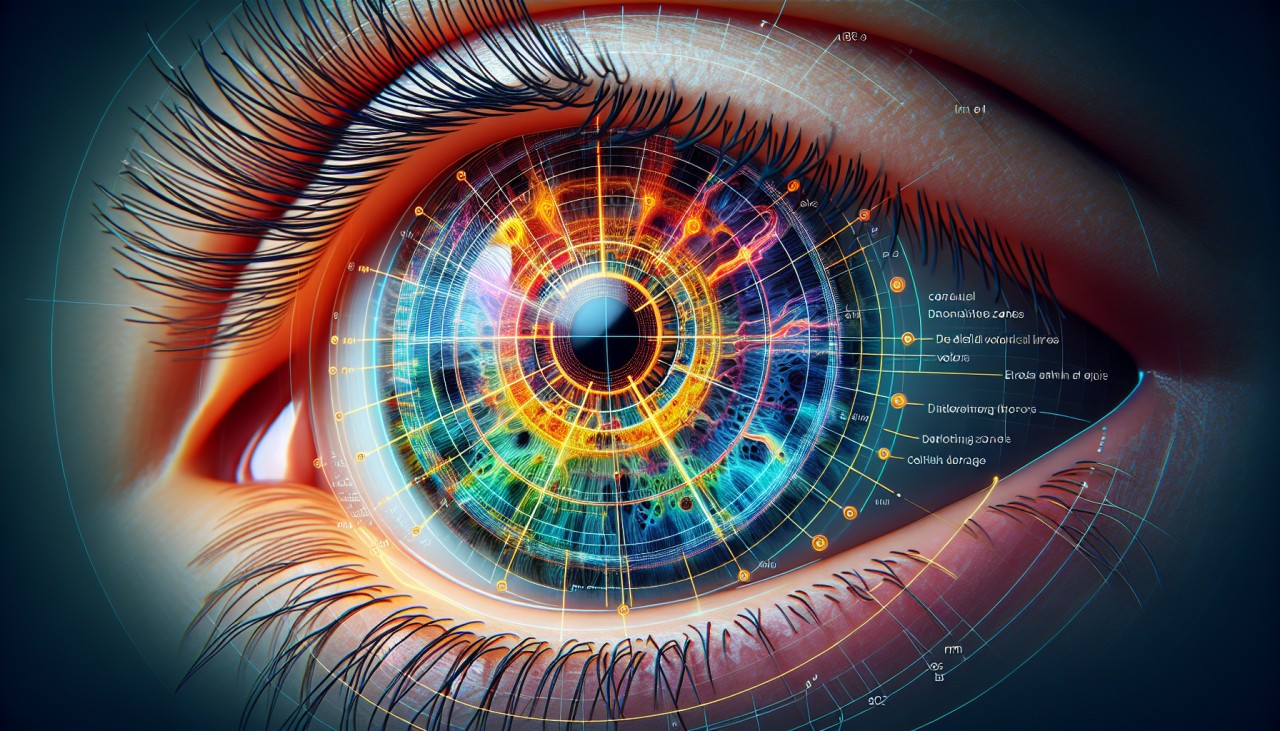
Iridology, also known as iris diagnosis, is a practice that involves examining the patterns, colors, and other characteristics of the iris—the colored part of the eye—to infer information about a person's systemic health. Proponents of iridology claim that specific markings or anomalies in the iris correspond to health conditions in various organs and systems of the body. This practice has roots tracing back to ancient civilizations, but it was popularized in the 19th century by Hungarian physician Ignaz von Peczely. Von Peczely's interest in iridology began when he observed a dark stripe in the iris of an owl after it had broken its leg. He hypothesized a connection between the injury and the iris marking, leading him to explore this relationship further. Despite its historical and cultural significance, iridology has faced significant skepticism from the medical and scientific communities. A systematic review published in the Journal of the American Medical Association (JAMA) in 1979 evaluated the validity of iridology as a diagnostic tool. The study concluded that iridology had no clinical or statistically significant ability to detect the presence of kidney disease, stating that the likelihood of correct detection was statistically no better than chance. jamanetwork.com Further research has consistently failed to support the claims of iridology. A 1999 systematic review found that the majority of investigations suggested that iridology is not a valid diagnostic method. pubmed.ncbi.nlm.nih.gov Additionally, a 2005 study aimed to investigate the value of iridology in detecting common cancers, including breast, ovarian, uterine, prostate, and colorectal cancers. The study found that iridology identified the correct diagnosis in only 3 cases, resulting in a sensitivity of 0.04, indicating that iridology was of no value in diagnosing the cancers investigated. pubmed.ncbi.nlm.nih.gov Despite the lack of scientific support, iridology continues to be practiced in various parts of the world. In countries like Germany, Austria, and Hungary, iridology is integrated into natural health practices, often used alongside herbal medicine, detoxification protocols, and nutritional guidance. In Asia, while not a core part of traditional systems like Chinese medicine or Ayurveda, iridology has found a niche within modern holistic wellness. It's utilized in countries such as India, South Korea, and Japan by progressive natural health practitioners as part of a broader assessment approach. In the United States, iridology is employed by herbalists, naturopaths, health coaches, and holistic practitioners as a tool for personalized wellness. Clients often turn to iridology when seeking deeper insight into chronic issues, emotional patterns, or preventive care. However, it's important to note that the practice of iridology is not supported by scientific evidence, and its use as a diagnostic tool is not recommended. The Australian Government's Department of Health conducted a review of alternative therapies in 2015, evaluating 17 therapies for potential inclusion in health insurance coverage. Iridology was among the therapies evaluated, and no clear evidence of effectiveness was found. en.wikipedia.org Given the lack of scientific validation, individuals interested in understanding their health should consult qualified healthcare professionals and rely on evidence-based diagnostic methods. While iridology may offer a holistic perspective, it should not replace conventional medical evaluations and treatments.
In recent years, there has been a growing interest in integrating technology with traditional practices like iridology. Some companies have developed applications that claim to analyze iris images to provide health insights. For instance, Iridology AI combines over 150 years of iridology knowledge with modern artificial intelligence to deliver health insights from a single photo. These tools aim to provide clear, actionable reports without medical jargon. However, it's crucial to approach such applications with caution. The scientific community has not validated the efficacy of iridology, and the integration of AI does not necessarily confer scientific credibility to the practice. Users should be aware that these tools are not substitutes for professional medical advice and should not be used as diagnostic instruments. The development of such applications highlights the broader trend of incorporating technology into health and wellness practices. While technology can enhance access to information and support personalized health strategies, it is essential to ensure that the information provided is accurate, evidence-based, and derived from reliable sources. In the case of iridology, the lack of scientific support means that any technological applications based on this practice should be viewed with skepticism. Individuals seeking to improve their health and well-being are encouraged to engage with evidence-based practices and consult healthcare professionals who can provide guidance grounded in scientific research. In summary, while iridology presents an intriguing concept of diagnosing health conditions through the examination of the iris, scientific evaluations have consistently found no evidence supporting its efficacy. The integration of technology into iridology does not address the fundamental lack of scientific validation. Therefore, individuals should approach iridology with caution and prioritize evidence-based medical practices for their health assessments and treatments.
Key Takeaways
- Iridology involves examining the iris to diagnose health conditions, but scientific evaluations have found no evidence supporting its efficacy.
- Despite its historical and cultural significance, iridology is not recognized as a valid diagnostic tool by the medical community.
- The integration of technology into iridology does not confer scientific credibility to the practice.
- Individuals seeking health insights should consult qualified healthcare professionals and rely on evidence-based diagnostic methods.
- While iridology may offer a holistic perspective, it should not replace conventional medical evaluations and treatments.
Example
Consider Sarah, a 35-year-old woman experiencing unexplained fatigue and digestive issues. She comes across an iridology app that claims to analyze iris images to provide health insights. Curious, Sarah uses the app, which suggests potential issues with her liver and digestive system based on her iris patterns. While the app provides a sense of direction, Sarah decides to consult her primary care physician for a comprehensive evaluation. Her doctor conducts a series of tests, including blood work and imaging studies, and diagnoses her with a mild case of irritable bowel syndrome (IBS). Sarah's doctor recommends dietary adjustments, stress management techniques, and a tailored exercise plan to manage her symptoms. This example illustrates the importance of seeking professional medical advice and relying on evidence-based diagnostic methods rather than unproven practices like iridology.