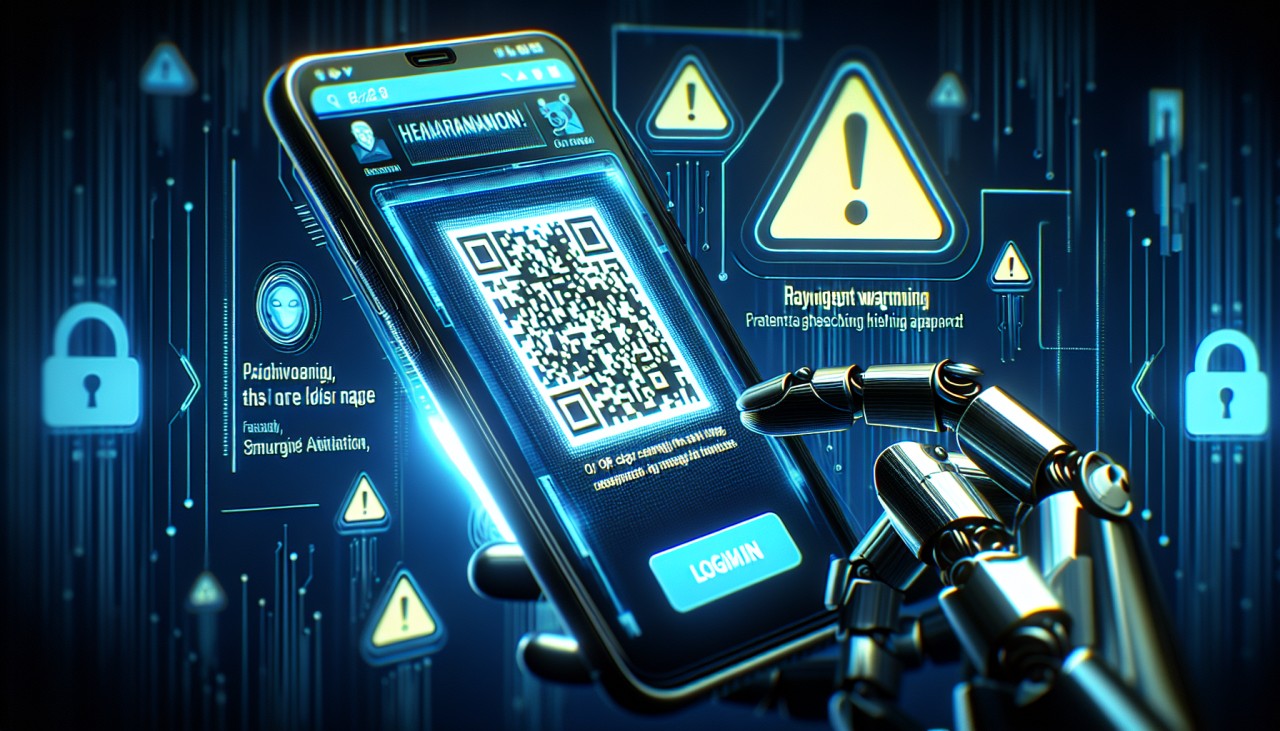
In recent years, QR codes have become ubiquitous, appearing on everything from restaurant menus to advertising materials. Their convenience and versatility have made them a staple in both personal and professional settings. However, this widespread adoption has also attracted the attention of cybercriminals, leading to a significant rise in QR code phishing attacks, commonly referred to as "quishing." These attacks exploit the trust users place in QR codes to steal sensitive information or deliver malware.
The surge in QR code phishing is alarming. Between August and November 2025, the number of phishing emails containing malicious QR codes increased from approximately 46,969 to 249,723—a more than fivefold growth. This rapid escalation underscores the effectiveness of QR codes in evading traditional security measures. Unlike standard URLs, QR codes can obscure the destination link, making it challenging for users and security systems to detect malicious intent. me-en.kaspersky.com
Cybercriminals employ various tactics to distribute malicious QR codes. One prevalent method involves embedding these codes within email bodies or, more commonly, PDF attachments. This strategy masks phishing links and encourages users to scan them on mobile devices, which often have less robust security compared to desktop systems. The embedded QR codes typically lead to fraudulent websites designed to steal login credentials, personal information, or financial data. me-en.kaspersky.com
The impact of QR code phishing is significant. In the first quarter of 2025, the Anti-Phishing Working Group (APWG) reported over 1 million phishing attacks, the highest quarterly total since late 2023. This surge highlights the growing sophistication and frequency of cyberattacks leveraging QR codes. linkedin.com
To protect against QR code phishing, users should exercise caution. It's advisable to avoid scanning QR codes from unknown or untrusted sources. Before scanning, inspect the URL to ensure it directs to a legitimate website. Additionally, using a QR code scanner app with built-in security features can help identify malicious links. Keeping software and security tools up to date is crucial, as cybercriminals continually evolve their tactics. mcafee.com
Organizations also play a vital role in combating QR code phishing. Implementing comprehensive security measures, including email filtering systems that can detect and block malicious QR codes, is essential. Educating employees about the risks associated with QR codes and promoting safe scanning practices can significantly reduce the likelihood of successful attacks. it.purdue.edu
In conclusion, while QR codes offer convenience, they also present new avenues for cybercriminals to exploit. Staying informed about the risks and adopting proactive security measures are key to mitigating the threats posed by QR code phishing.
The digital landscape is continually evolving, and with it, the tactics employed by cybercriminals. QR code phishing, or "quishing," has emerged as a significant threat, leveraging the widespread use and trust of QR codes to deceive users into compromising their personal and financial information. Understanding the mechanics of these attacks and implementing effective countermeasures is essential for both individuals and organizations.
QR codes, or Quick Response codes, are two-dimensional barcodes that store information accessible via smartphones and other devices. Their ease of use and ability to quickly direct users to websites, apps, or other digital content have made them a popular tool in marketing, payments, and information sharing. However, this convenience has also made them a target for malicious actors.
Cybercriminals exploit QR codes by embedding them in various forms of communication, including emails, text messages, and even physical locations. These malicious QR codes often lead to fraudulent websites designed to steal login credentials, personal information, or financial data. The deceptive nature of QR codes lies in their ability to mask the destination URL, making it difficult for users to discern between legitimate and malicious links.
The rise in QR code phishing attacks is concerning. Between February 2024 and February 2025, nearly 21% of employees at global organizations reported experiencing a QR code phishing attack. This statistic highlights the pervasive nature of the threat and the need for heightened awareness and vigilance. statista.com
To mitigate the risks associated with QR code phishing, users should adhere to several best practices. First, avoid scanning QR codes from unknown or untrusted sources. If a QR code is received unsolicited via email, text message, or social media, it's prudent to refrain from scanning it. Second, before scanning a QR code, inspect the URL to ensure it directs to a legitimate website. Many QR code scanner apps display the URL before opening it, providing an opportunity to verify its authenticity. Third, use a QR code scanner app with built-in security features that can detect and warn users about malicious links. These apps often provide additional layers of protection by analyzing the destination URL for known threats. Fourth, keep your device's software and security tools up to date. Regular updates ensure that your device has the latest security patches, reducing vulnerabilities that cybercriminals can exploit. mcafee.com
Organizations have a critical role in defending against QR code phishing. Implementing comprehensive security measures, such as email filtering systems capable of detecting and blocking malicious QR codes, is essential. These systems can analyze incoming emails for embedded QR codes and assess their safety before they reach the end user. Additionally, educating employees about the risks associated with QR codes and promoting safe scanning practices can significantly reduce the likelihood of successful attacks. Training programs should include information on recognizing suspicious QR codes, understanding the potential consequences of scanning malicious codes, and reporting incidents promptly. it.purdue.edu
In conclusion, while QR codes offer significant benefits in terms of convenience and efficiency, they also present new challenges in the realm of cybersecurity. By staying informed about the risks and adopting proactive security measures, individuals and organizations can better protect themselves against the growing threat of QR code phishing.
Key Takeaways
- QR code phishing attacks have increased over fivefold between August and November 2025.
- Cybercriminals embed malicious QR codes in emails and PDF attachments to steal sensitive information.
- Users should avoid scanning QR codes from untrusted sources and verify URLs before scanning.
- Organizations should implement email filtering systems and educate employees on safe QR code practices.
- Keeping software and security tools updated is crucial to defend against evolving cyber threats.
- Between February 2024 and February 2025, nearly 21% of employees at global organizations reported experiencing a QR code phishing attack.
- Users should avoid scanning QR codes from unknown sources, verify URLs before scanning, and use security-focused QR code scanner apps.
- Organizations should implement email filtering systems to detect malicious QR codes and educate employees on safe scanning practices.
- Keeping device software and security tools updated is crucial to defend against evolving cyber threats.
- Proactive education and awareness are key to mitigating the risks associated with QR code phishing.