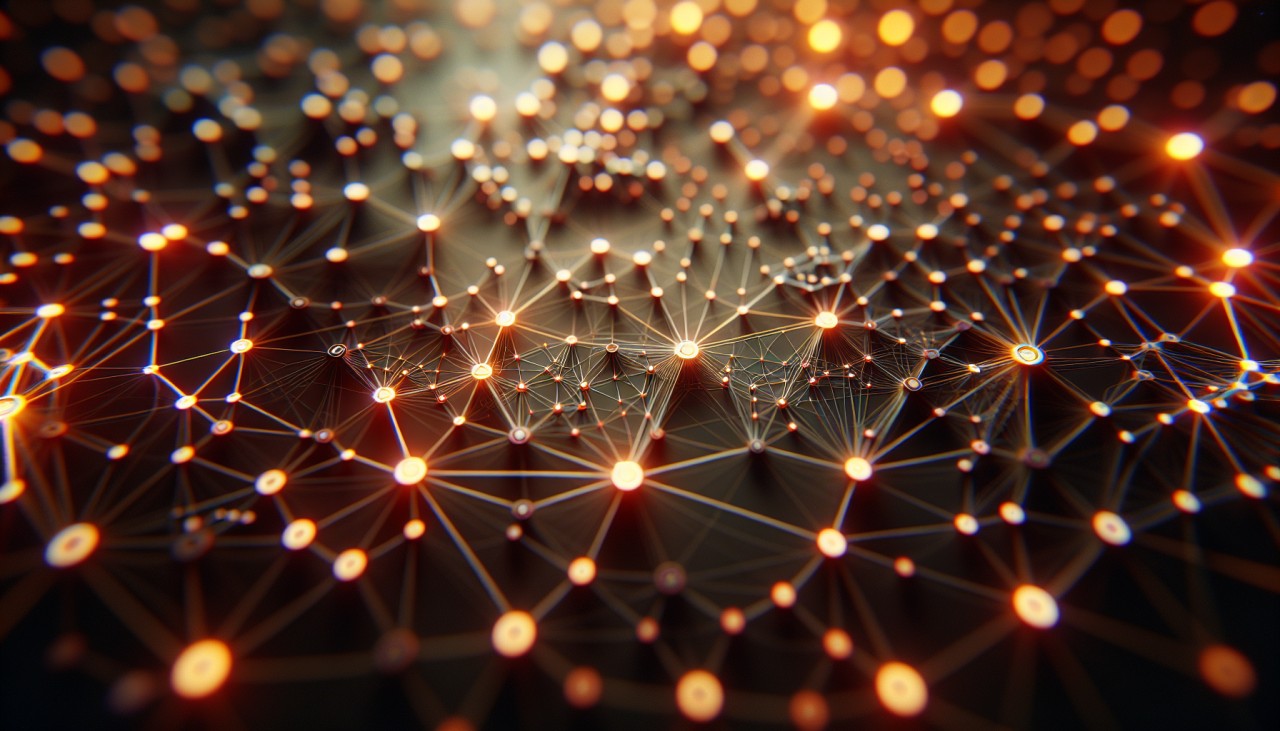
Graph Neural Networks (GNNs) have emerged as a transformative tool in the realm of machine learning, offering a robust framework for analyzing data that is inherently structured as graphs. This includes a vast array of applications, from social networks and recommendation systems to molecular chemistry and beyond. The core strength of GNNs lies in their ability to capture the intricate relationships and dependencies between entities, enabling models to learn representations that reflect the underlying graph topology.
At the heart of GNNs is the message-passing mechanism, where nodes iteratively exchange information with their neighbors to update their representations. This process allows the network to aggregate local information, effectively capturing the local structure of the graph. However, traditional GNNs often face challenges when dealing with graphs that exhibit heterophily, a condition where connected nodes have dissimilar attributes. In such scenarios, the standard message-passing approach may lead to over-smoothing, where node representations become indistinguishable, thereby impairing the model's ability to distinguish between different classes.
To address these challenges, recent research has introduced several innovative architectures and techniques. One notable advancement is the development of Parameterized Diffusion-based Graph Convolutional Networks (PD-GCNs) and Graph Attention Networks (PD-GATs). These models incorporate parameterized Laplacian matrices, which offer greater flexibility in controlling the diffusion distance between nodes. By adjusting these parameters, PD-GCNs and PD-GATs can adaptively capture long-range dependencies, effectively mitigating the over-smoothing problem and enhancing performance on heterophilic graphs. Empirical studies have demonstrated that these models outperform traditional GNNs on various benchmark datasets, highlighting their efficacy in capturing complex relationships within data.
Another significant development is the integration of graph kernels into the GNN framework, leading to the creation of Kernel Graph Neural Networks (KerGNNs). Graph kernels have long been utilized for graph classification tasks due to their ability to measure the similarity between graphs. By incorporating graph kernels into the message-passing process, KerGNNs enhance the expressive power of GNNs, enabling them to capture more complex graph structures. This integration not only improves performance but also enhances the interpretability of the models, as the learned graph filters can reveal local graph structures, providing insights into the underlying data.
The application of GNNs has also seen significant progress in the field of materials science. Researchers have developed models that utilize GNNs to predict properties of molecules and crystals, demonstrating the versatility of GNNs in handling diverse types of data. These models learn element embeddings that encode periodic chemical trends, facilitating the prediction of material properties with smaller datasets. The success of GNNs in this domain underscores their potential in scientific research, where understanding complex relationships is crucial.
Despite these advancements, challenges remain in the scalability and efficiency of GNNs, particularly when dealing with large-scale graphs. The computational complexity of GNNs can be prohibitive, necessitating the development of more efficient algorithms and architectures. Techniques such as hierarchical graph representations and sampling methods have been proposed to address these issues, aiming to reduce the computational burden while maintaining the quality of the learned representations.
In conclusion, Graph Neural Networks continue to evolve, offering powerful tools for modeling complex, relational data. Ongoing research and development are poised to further enhance their capabilities, making them indispensable in a wide range of applications. As the field progresses, it is essential to address existing challenges to fully realize the potential of GNNs in various domains.
Key Takeaways
- Innovations like PD-GCNs and PD-GATs address challenges in heterophilic graphs.
- KerGNNs integrate graph kernels to enhance model interpretability.
- GNNs are applied in materials science for property prediction.
- Scalability remains a challenge for large-scale graph processing.
- Ongoing research aims to improve GNN efficiency and applicability.