[Paragraph 1]
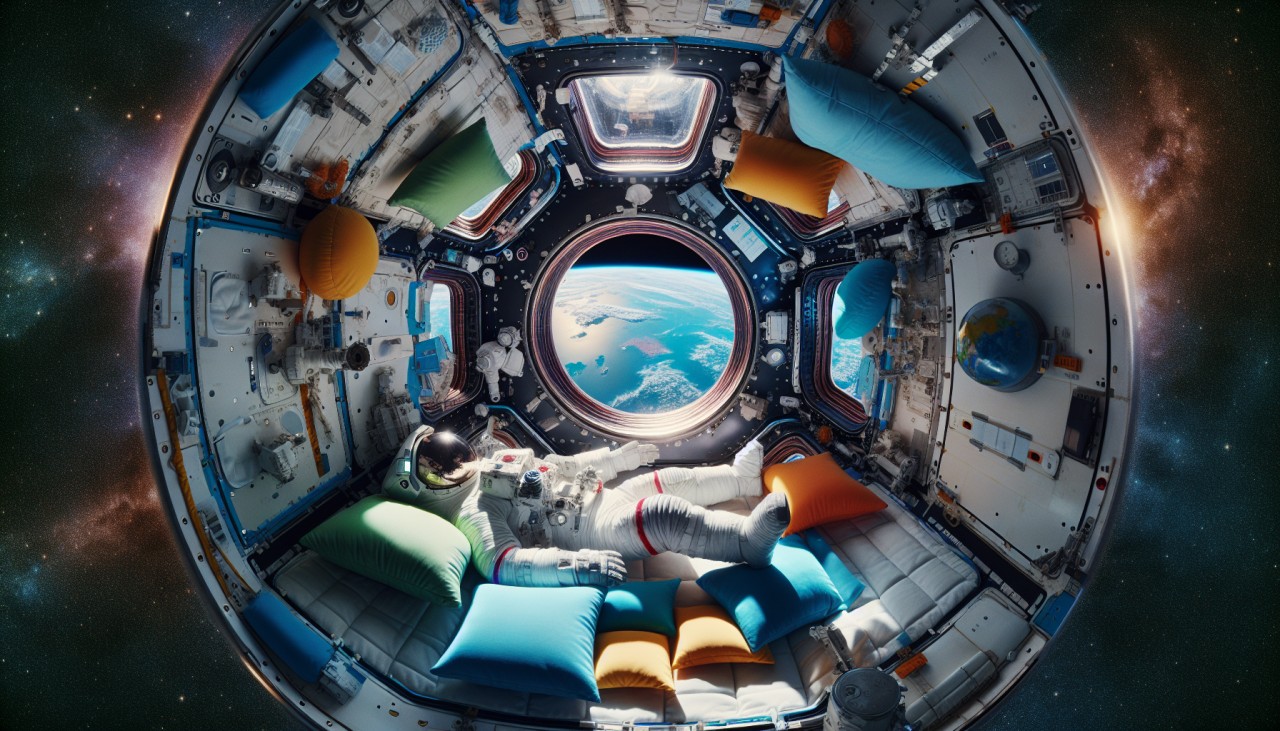
Sleep is a fundamental aspect of human health, influencing cognitive function, emotional well-being, and overall performance. On Earth, our sleep patterns are regulated by the natural day-night cycle, but in the unique environment of space, these rhythms are disrupted. Astronauts aboard the International Space Station (ISS) face challenges that can lead to sleep deprivation, affecting their alertness and efficiency. Studies have shown that astronauts average approximately six hours of sleep per night in space, which is less than the recommended seven to nine hours for optimal functioning. This reduction in sleep duration has been associated with decreased performance and increased fatigue. The causes of this sleep loss are multifaceted, involving both the physical environment of space and the demands of the mission.
One significant factor is the absence of a natural day-night cycle in space. The ISS orbits Earth approximately every 90 minutes, resulting in 16 sunrises and sunsets each day. This constant exposure to light can disrupt circadian rhythms, making it difficult for astronauts to maintain regular sleep patterns. To mitigate this, the ISS is equipped with artificial lighting systems designed to simulate a 24-hour day, but these systems are not always perfectly synchronized with individual crew members' needs. Additionally, the microgravity environment presents challenges for sleep. Without the sensation of a bed or gravity to anchor them, astronauts must secure themselves in sleeping bags attached to the walls of their quarters. This lack of a stable sleeping position can lead to discomfort and fragmented sleep.
The workload and stress associated with space missions also contribute to sleep disturbances. Astronauts often have demanding schedules, with tasks ranging from scientific experiments to maintenance of the spacecraft. The pressure to perform these tasks accurately and efficiently can lead to stress, which in turn can interfere with the ability to fall and stay asleep. Moreover, the isolation and confinement of space travel can lead to psychological stressors, such as feelings of loneliness and anxiety, which are known to affect sleep quality.
To address these challenges, NASA has implemented various countermeasures. These include the use of sleep medications, such as zolpidem (commonly known as Ambien), to help astronauts initiate and maintain sleep. However, the effectiveness of these medications has been variable. A study published in 2014 found that 78% of shuttle crew members reported using sleep medications on more than half the nights they spent in space. Despite this high usage, the study concluded that more effective measures are needed to encourage rest during space flight. pbs.org
In addition to pharmacological interventions, NASA has focused on improving the sleep environment. Recent missions have provided crew members with better, more stable sleep and work schedules, as well as improved sleep quarters that are private, dark, and quiet. These enhancements aim to create an environment more conducive to restful sleep. Despite these improvements, variability in sleep duration persists, indicating that further research is needed to fully understand and mitigate the factors affecting sleep in space.
Understanding sleep patterns in space is crucial, not only for the health and performance of astronauts but also for the success of long-duration missions, such as those planned for Mars exploration. Ongoing research into the physiological and psychological effects of space travel on sleep will inform the development of more effective countermeasures, ensuring that astronauts can achieve the restorative sleep necessary for optimal performance and well-being.
[Paragraph 2]
Recent studies have provided deeper insights into the complexities of sleep in space. Research published in 2024 compared sleep outcomes during spaceflight with those on Earth, revealing that wakefulness increased by one hour in space compared to Earth. Over time in space, rapid eye movement (REM) sleep was initially reduced and then recovered to near preflight levels, while non-REM sleep decreased. Upon return to Earth, sleep architecture returned to preflight distribution. These findings suggest that spaceflight may alter sleep architecture and warrant further exploration. pubmed.ncbi.nlm.nih.gov
Another study published in 2025 reviewed multi-disciplinary interventions for circadian disruption and sleep disorders in astronauts during long-duration space missions. The review highlighted that circadian misalignment occurred approximately once out of every five sleep episodes aboard the ISS. When crewmembers' sleep episodes were misaligned, they slept nearly one hour less per night and reported poorer sleep quality. Astronauts were more likely to experience circadian misalignment during critical operations, such as when a vehicle was docked with the ISS. These findings underscore the importance of understanding and mitigating circadian disruptions to maintain alertness and reduce fatigue during missions. mdpi.com
The European Space Agency (ESA) has also been investigating the impact of altered natural rhythms on sleep and circadian rhythms in space. Without the normal rhythm of daylight and night, these circadian rhythms are perturbed, affecting sleep quality. Chronic sleep deprivation can lead to immunodeficiency, and complaints about sleep quality are among the most commonly reported medical problems by astronauts. Currently, the common remedy is the prescription of sleep pills, but this approach may not address the underlying issues. esa.int
In simulated missions, such as the MARS-500 project, participants experienced considerable sleep problems, including increased sleep and rest times, and disruptions to their circadian rhythms during confinement. These findings highlight the challenges of maintaining healthy sleep patterns in isolated and confined environments, which are characteristic of long-duration space missions. en.wikipedia.org
Understanding the factors that influence sleep in space is essential for developing effective countermeasures to ensure the health and performance of astronauts. Ongoing research into the physiological and psychological effects of space travel on sleep will inform the development of strategies to mitigate sleep disturbances, thereby enhancing the success of future space missions.
Key Takeaways
- Astronauts average approximately six hours of sleep per night in space, less than the recommended seven to nine hours.
- Circadian misalignment occurs approximately once out of every five sleep episodes aboard the ISS, leading to nearly one hour less sleep per night.
- Sleep medications, such as zolpidem, are commonly used by astronauts but have shown variable effectiveness.
- Improving the sleep environment and schedules on the ISS has led to better sleep quality among crew members.
- Ongoing research is crucial to develop effective countermeasures for sleep disturbances in space, ensuring astronaut health and mission success.