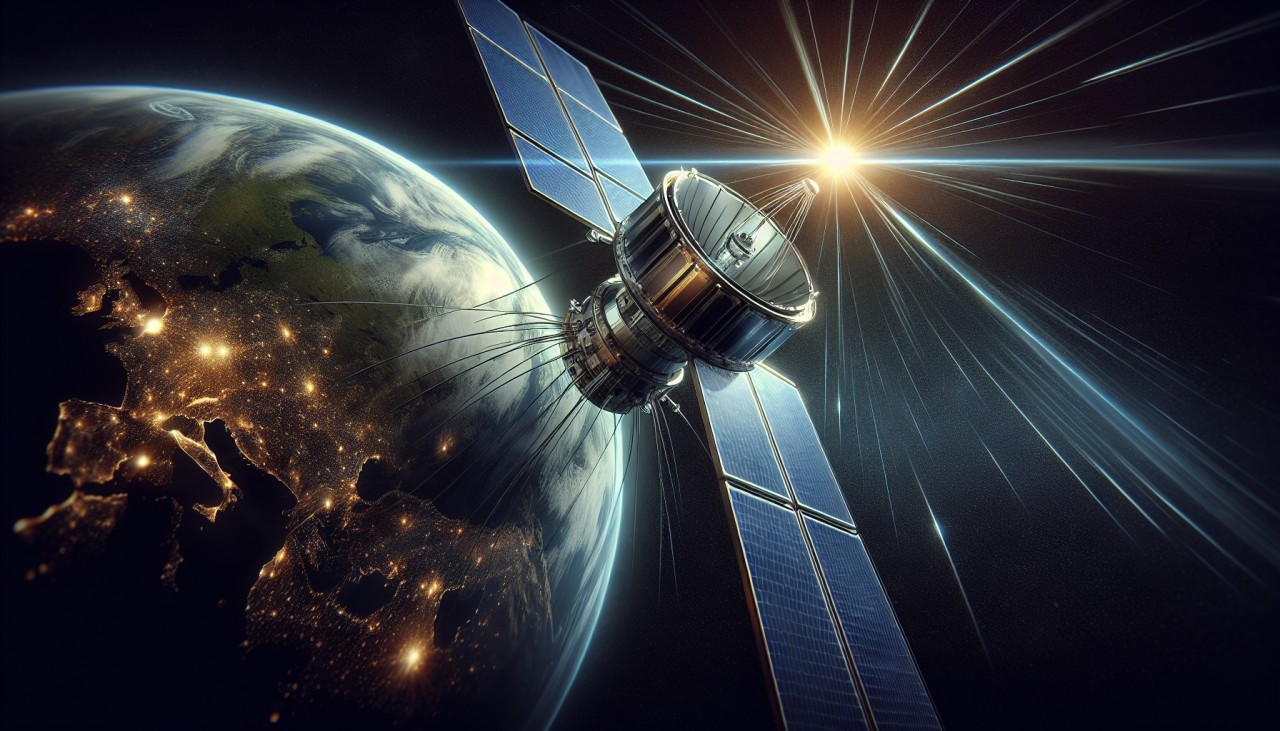
Space-based solar power (SBSP) is an innovative concept that has been gaining traction in recent years as a potential solution to the world's growing energy demands and the challenges associated with terrestrial renewable energy sources. The idea involves capturing solar energy in space, where sunlight is abundant and uninterrupted, and transmitting it to Earth for use. This approach offers several advantages over traditional solar power, including continuous energy generation and the ability to harness solar energy in regions where it is not feasible to install ground-based solar panels.
The concept of SBSP is not new; it has been explored since the 1970s. However, recent technological advancements and decreasing launch costs have renewed interest in this field. One of the key challenges in implementing SBSP is the efficient transmission of energy from space to Earth. Various methods have been proposed, including microwave and laser-based systems. Each method has its own set of technical challenges, such as ensuring safety, maintaining alignment, and minimizing energy loss during transmission.
In recent developments, companies like Aetherflux Inc. have been actively working on commercializing SBSP. Founded by Baiju Bhatt, a former co-CEO of Robinhood, Aetherflux aims to build a constellation of satellites equipped with solar panels to collect energy in space and transmit it to Earth via infrared lasers. The company plans to undertake its first mission and space demonstration in early 2026, with the goal of bringing an "orbital data center" into commercial operation by the first quarter of 2027. en.wikipedia.org
Another notable initiative is Overview Energy, a U.S.-based startup that plans to install solar panels on satellites in geostationary orbit to collect solar energy continuously. The collected energy would be transmitted to ground-based solar parks via infrared lasers, providing a constant power supply regardless of time of day or weather conditions. The company has already conducted successful tests transmitting energy from a moving aircraft to a receiver 5 kilometers away and plans to conduct a functional test in low Earth orbit by 2028, with commercial operations expected to begin in 2030. huffingtonpost.es
The European Space Agency (ESA) has also been exploring SBSP through its SOLARIS project. The proposal includes an in-orbit demonstration around 2030, with the first operational station in geostationary orbit by 2040, followed by subsequent stations. Each modular solar panel would be nearly 1 kilometer wide, with ground receiving antennas about 6 kilometers wide, generating up to a petawatt of power. The program is estimated to supply between one-seventh and one-third of Europe's current power demand or 10% of its predicted demand by 2050. en.wikipedia.org
Despite the promising developments, several challenges remain in the path of SBSP. The high costs associated with launching and maintaining satellites in orbit are significant barriers. Additionally, the efficiency of energy transmission methods, such as laser or microwave beams, must be optimized to ensure minimal energy loss and to address safety concerns. The long-term durability of space-based infrastructure and the potential environmental impacts of transmitting large amounts of energy through the atmosphere are also areas of ongoing research.
In conclusion, space-based solar power represents a frontier in renewable energy that could revolutionize the way we generate and consume electricity. While there are substantial technical and economic hurdles to overcome, the progress made by various organizations and companies indicates a growing commitment to exploring this innovative energy solution. As research and development continue, SBSP may become a viable and sustainable energy source in the near future, contributing significantly to global efforts in combating climate change and meeting the world's energy needs.
The integration of space-based solar power into existing energy systems could lead to a more resilient and diversified energy grid. By harnessing solar energy from space, we can mitigate some of the challenges associated with terrestrial renewable sources, such as intermittency and geographic limitations. For instance, regions that are not suitable for ground-based solar installations due to weather conditions or land availability could benefit from SBSP. Moreover, the continuous nature of solar energy collection in space ensures a steady and reliable power supply, which is crucial for meeting the increasing global energy demand.
The potential environmental benefits of SBSP are also noteworthy. By generating clean energy in space and transmitting it to Earth, we can reduce our reliance on fossil fuels and decrease greenhouse gas emissions. Additionally, the use of space-based infrastructure for energy generation could alleviate some of the land-use conflicts associated with large-scale terrestrial renewable projects. However, it is essential to conduct thorough environmental assessments to understand the potential impacts of SBSP on space debris, the Earth's atmosphere, and other aspects of the environment.
The economic implications of SBSP are multifaceted. While the initial investment required for developing and deploying space-based solar power systems is substantial, the long-term benefits could outweigh the costs. The ability to provide a constant and reliable power supply could lead to economic growth and stability, particularly in regions with limited access to traditional energy sources. Furthermore, advancements in technology and reductions in launch costs are expected to make SBSP more economically feasible in the coming years.
In the realm of artificial intelligence (AI) and data processing, SBSP could play a transformative role. The continuous and abundant energy supply from space-based solar power could support the growing computational needs of AI applications. Companies like Starcloud and Crusoe are already planning to deploy Nvidia H100 GPUs into orbit to create the first space-based data centers. These initiatives aim to leverage the full intensity of solar energy in space to power AI models and other compute-heavy workloads, potentially revolutionizing cloud computing by offering more efficient and sustainable solutions. techradar.com
The development of space-based solar power also has the potential to drive innovation in related fields. Advancements in satellite technology, energy transmission methods, and space infrastructure could have broader applications beyond energy generation. For example, the technologies developed for SBSP could be adapted for use in space exploration, telecommunications, and other sectors, leading to a more interconnected and technologically advanced society.
In summary, space-based solar power holds significant promise as a clean, reliable, and abundant energy source. While challenges remain, the ongoing research, technological advancements, and commercial initiatives indicate a growing momentum toward realizing this vision. As we continue to explore and develop space-based solar power, it is crucial to consider the environmental, economic, and social implications to ensure that this technology contributes positively to our global energy landscape.
Key Takeaways
- Space-based solar power involves capturing solar energy in space and transmitting it to Earth.
- Recent technological advancements and decreasing launch costs have renewed interest in SBSP.
- Companies like Aetherflux and Overview Energy are actively working on commercializing SBSP.
- Challenges include high costs, efficient energy transmission, and environmental impacts.
- SBSP could revolutionize energy systems and support growing computational needs of AI applications.