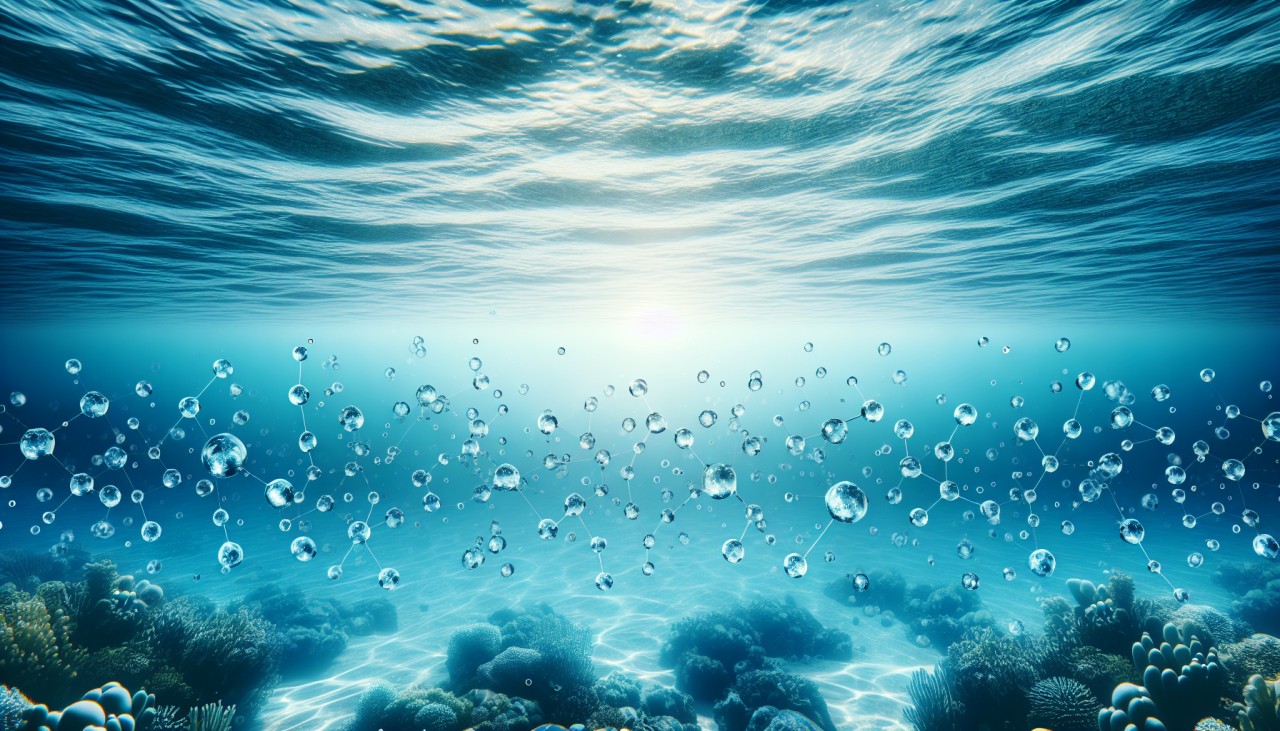
The oceans, covering over 70% of Earth's surface, play a pivotal role in regulating our planet's climate. They act as a massive carbon sink, absorbing approximately one-third of the carbon dioxide (CO₂) emitted into the atmosphere. This natural process helps mitigate the impacts of climate change. However, as human activities have intensified CO₂ emissions, the oceans' capacity to absorb additional carbon has been strained, leading to increased acidification and other ecological challenges. To address these issues, scientists and innovators are developing and deploying various ocean carbon capture technologies aimed at enhancing the oceans' ability to sequester atmospheric CO₂.
One promising approach is the Direct Ocean Capture (DOC) system, exemplified by companies like Captura. Their technology utilizes seawater and renewable electricity to extract CO₂ directly from the ocean. This process involves passing seawater through an electrodialysis cell, which separates CO₂ from the water, allowing it to be stored or repurposed. The beauty of this method lies in its simplicity and scalability. By enhancing the ocean's natural carbon removal processes without introducing additives or by-products, DOC systems can potentially operate at a gigaton scale, significantly contributing to global CO₂ reduction efforts. Moreover, these systems are designed to be energy-efficient and environmentally friendly, aligning with the broader goals of sustainable development.
Another innovative technique is ocean alkalinity enhancement, which involves dispersing finely ground silicate minerals, such as olivine, into the ocean. This process increases the water's alkalinity, enabling it to absorb more CO₂ from the atmosphere. As the minerals dissolve, they react with CO₂ to form stable carbonates, effectively sequestering the carbon for thousands of years. This method not only captures atmospheric CO₂ but also combats ocean acidification, a pressing concern for marine ecosystems. Organizations like Project Vesta are at the forefront of this research, conducting pilot projects to assess the feasibility and impact of this approach. Their work includes studying the dissolution rates of olivine and monitoring the ecological effects on marine life, aiming to ensure that the benefits outweigh any potential risks.
In addition to these technological solutions, natural processes are being harnessed to enhance carbon sequestration. The microbial carbon pump is a biological mechanism where marine microorganisms convert dissolved organic carbon into refractory dissolved organic carbon, which is resistant to decomposition. This process effectively locks away carbon in the deep ocean for centuries to millennia, contributing significantly to long-term carbon storage. Understanding and potentially amplifying this natural pump could offer a sustainable and low-cost method for CO₂ removal. Research into the microbial carbon pump focuses on identifying the key microbial communities involved and the environmental factors that influence their activity, with the goal of developing strategies to optimize this natural process.
The potential of ocean carbon capture has not gone unnoticed by the private sector. In 2025, a coalition of major tech companies, including Google, Stripe, Shopify, Meta, H&M Group, JPMorgan Chase, and Salesforce, known as Frontier, invested $1.7 million in carbon removal credits from early-stage firms specializing in ocean-based and mineralization methods. This initiative underscores the growing recognition of the importance of ocean carbon capture in achieving global climate goals. By supporting innovative technologies, these companies aim to accelerate the development and deployment of scalable and cost-effective carbon removal solutions.
However, the rapid advancement of ocean carbon capture technologies has raised important questions regarding their environmental impact and regulatory oversight. For instance, Israeli startup Gigablue claims to have developed a novel ocean-based technology that disperses specially designed particles into the ocean to support algae growth, which then sink to the seafloor, theoretically sequestering carbon for centuries. Despite selling 200,000 carbon credits, the scientific community remains skeptical due to the lack of transparency and peer-reviewed data. Concerns include the feasibility of algae colonizing the particles, potential impacts on marine ecosystems, and the inclusion of materials that may contravene international treaties on ocean fertilization. This situation highlights the need for rigorous scientific evaluation and regulatory frameworks to ensure that such technologies are both effective and environmentally safe.
In conclusion, ocean carbon capture presents a promising avenue for mitigating climate change by enhancing the oceans' natural ability to sequester atmospheric CO₂. Through innovative technologies and a deeper understanding of natural processes, we can develop scalable and sustainable solutions to address the climate crisis. However, it is crucial to approach these technologies with caution, ensuring that they are thoroughly tested and regulated to prevent unintended ecological consequences. As research progresses and more data becomes available, ocean carbon capture could play a significant role in our global strategy to combat climate change.
Key Takeaways
- Ocean carbon capture enhances the oceans' natural ability to sequester atmospheric CO₂.
- Direct Ocean Capture systems utilize seawater and renewable electricity to extract CO₂.
- Ocean alkalinity enhancement involves dispersing minerals like olivine to increase CO₂ absorption.
- The microbial carbon pump is a natural process that locks away carbon in the deep ocean.
- Private sector investments are accelerating the development of ocean-based carbon removal technologies.