



The Evolution of AI Hardware Acceleration
AI hardware acceleration is undergoing a transformative shift, with custom silicon, advanced memory technologies, and innovative architectures driving unprecedented performance and efficiency.
Tech • Health • Future — Your signal in the noise
AI hardware acceleration is undergoing a transformative shift, with custom silicon, advanced memory technologies, and innovative architectures driving unprecedented performance and efficiency.

Explore the transformative impact of diffusion models in machine learning, their applications, and the future of generative AI.

Time Series AI is transforming data analysis by enabling accurate predictions and insights across various industries, from healthcare to finance.
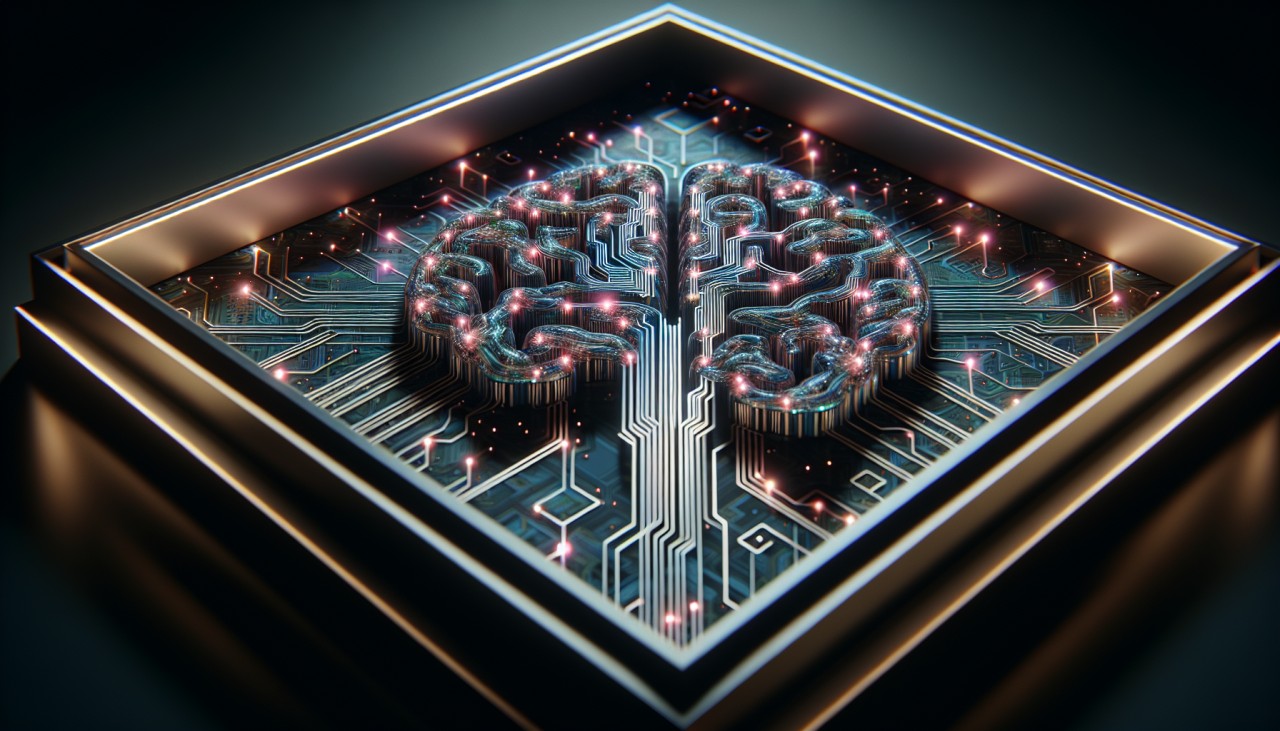
Neuromorphic computing is revolutionizing technology by emulating the human brain's architecture, leading to more efficient and intelligent systems. This article explores its evolution, current advancements, and future potential.

Neural Architecture Search (NAS) is revolutionizing the design of deep learning models by automating the creation of optimal neural network architectures. This article delves into the latest advancements in NAS, exploring its methodologies, applications, and the challenges it addresses in the realm of artificial intelligence.

As artificial intelligence (AI) continues to revolutionize industries, the importance of robust compute governance becomes paramount. This article delves into the evolving landscape of compute governance, exploring its significance, challenges, and the innovative solutions emerging to address them.

Vector databases are revolutionizing AI by enabling efficient storage and retrieval of high-dimensional data, essential for tasks like semantic search and recommendation systems.

Exploring the complexities of AI bias detection, its real-world implications, and the innovative methods developed to identify and mitigate biases in artificial intelligence systems.

Graph Neural Networks (GNNs) are revolutionizing data analysis by effectively modeling complex relationships in data. Recent advancements have enhanced their performance, interpretability, and applicability across various domains.