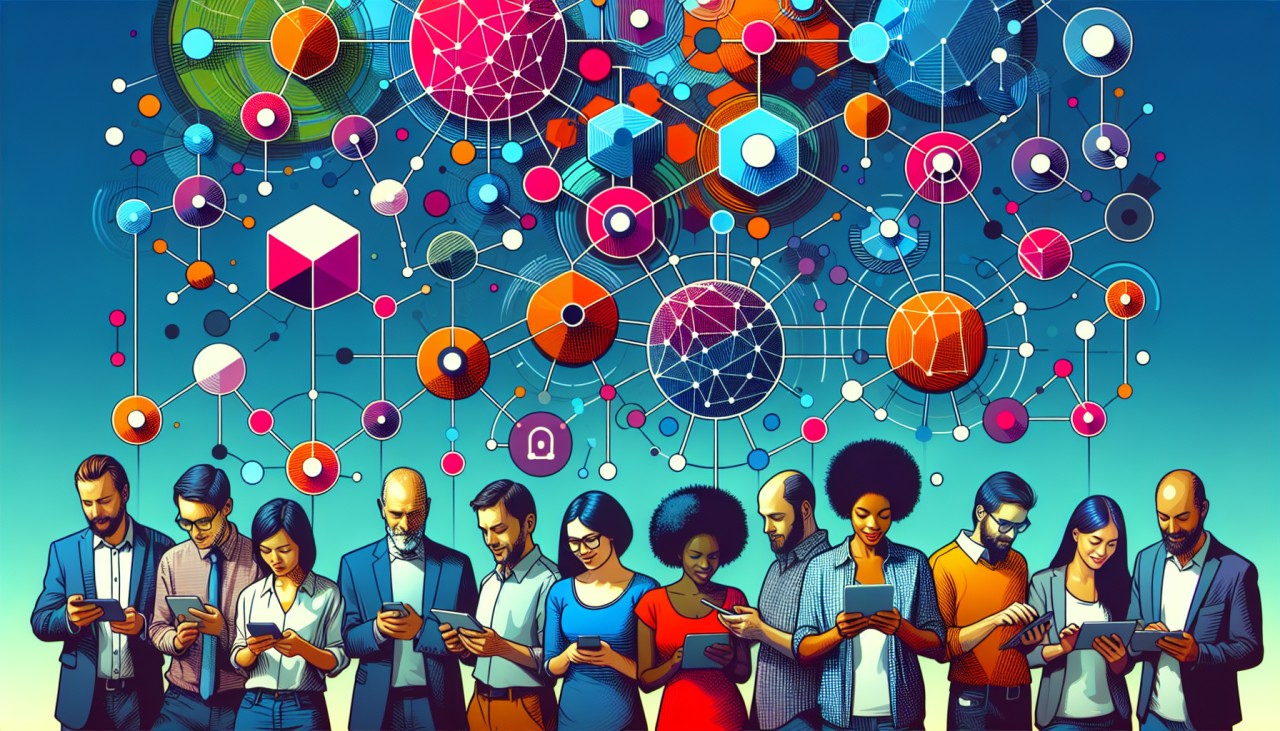
In the ever-evolving digital era, centralized platforms have long dominated our online interactions, from social media to financial services. However, a transformative shift is underway with the rise of decentralized applications (dApps), powered by blockchain technology. Unlike traditional apps that rely on central servers, dApps operate on peer-to-peer networks, distributing data across multiple nodes. This architecture not only enhances security and transparency but also empowers users with greater control over their data and interactions.
The concept of dApps is rooted in the principles of decentralization, aiming to eliminate single points of failure and reduce the risk of data breaches. By leveraging blockchain's immutable ledger, dApps ensure that once data is recorded, it cannot be altered or deleted, fostering trust among users. This feature is particularly crucial in sectors like finance, where transparency and security are paramount.
One of the most significant impacts of dApps is in the realm of decentralized finance (DeFi). Traditional financial systems often involve intermediaries, leading to delays and additional costs. DeFi platforms, built on blockchain, allow users to engage in lending, borrowing, and trading directly with one another, bypassing traditional banks. This peer-to-peer model not only accelerates transactions but also democratizes access to financial services, enabling individuals in underserved regions to participate in the global economy.
The tokenization of real-world assets is another groundbreaking development facilitated by dApps. By converting physical assets like real estate, art, or commodities into digital tokens, dApps enable fractional ownership, allowing individuals to invest in high-value assets with smaller capital. This innovation opens up new investment avenues and promotes financial inclusion by lowering entry barriers.
Moreover, the integration of artificial intelligence (AI) with dApps is paving the way for smarter, more efficient applications. AI algorithms can analyze vast amounts of data to provide personalized user experiences, optimize transaction processes, and enhance security measures. For instance, AI-driven risk assessment tools can evaluate the creditworthiness of borrowers in DeFi platforms, making lending decisions more accurate and reliable.
Despite the promising prospects, the adoption of dApps faces several challenges. Scalability remains a significant hurdle, as many blockchain networks struggle to handle a high volume of transactions without compromising speed or increasing costs. However, advancements in Layer 2 solutions and alternative blockchains are addressing these issues, making dApps more viable for mainstream use.
User experience (UX) is another critical factor influencing the adoption of dApps. The complexity of managing private keys, understanding gas fees, and navigating decentralized interfaces can be daunting for non-technical users. To overcome this, developers are focusing on creating intuitive interfaces, simplifying wallet management, and abstracting the underlying blockchain complexities to provide a seamless user experience.
The regulatory landscape for dApps is also evolving. As these applications gain traction, governments and regulatory bodies are working to establish frameworks that ensure consumer protection, prevent fraud, and promote innovation. Clear regulations will provide legal certainty, encouraging more developers and users to embrace decentralized technologies.
Looking ahead, the future of dApps appears promising. The continuous evolution of blockchain technology, coupled with growing user demand for privacy, security, and control over personal data, is driving the development of more sophisticated and user-friendly decentralized applications. Industries such as healthcare, supply chain management, and digital identity verification are exploring the potential of dApps to enhance transparency, traceability, and efficiency.
In conclusion, decentralized applications are at the forefront of a digital revolution, challenging traditional centralized models and offering a more secure, transparent, and user-centric approach to online interactions. As technology advances and adoption increases, dApps are poised to redefine how we engage with digital services, heralding a new era of decentralized innovation.
Key Takeaways
- dApps operate on peer-to-peer networks, enhancing security and transparency.
- DeFi platforms enable direct peer-to-peer financial transactions, bypassing traditional banks.
- Tokenization allows fractional ownership of real-world assets, promoting financial inclusion.
- AI integration with dApps leads to smarter, more efficient applications.
- Scalability and user experience are key challenges for dApp adoption.