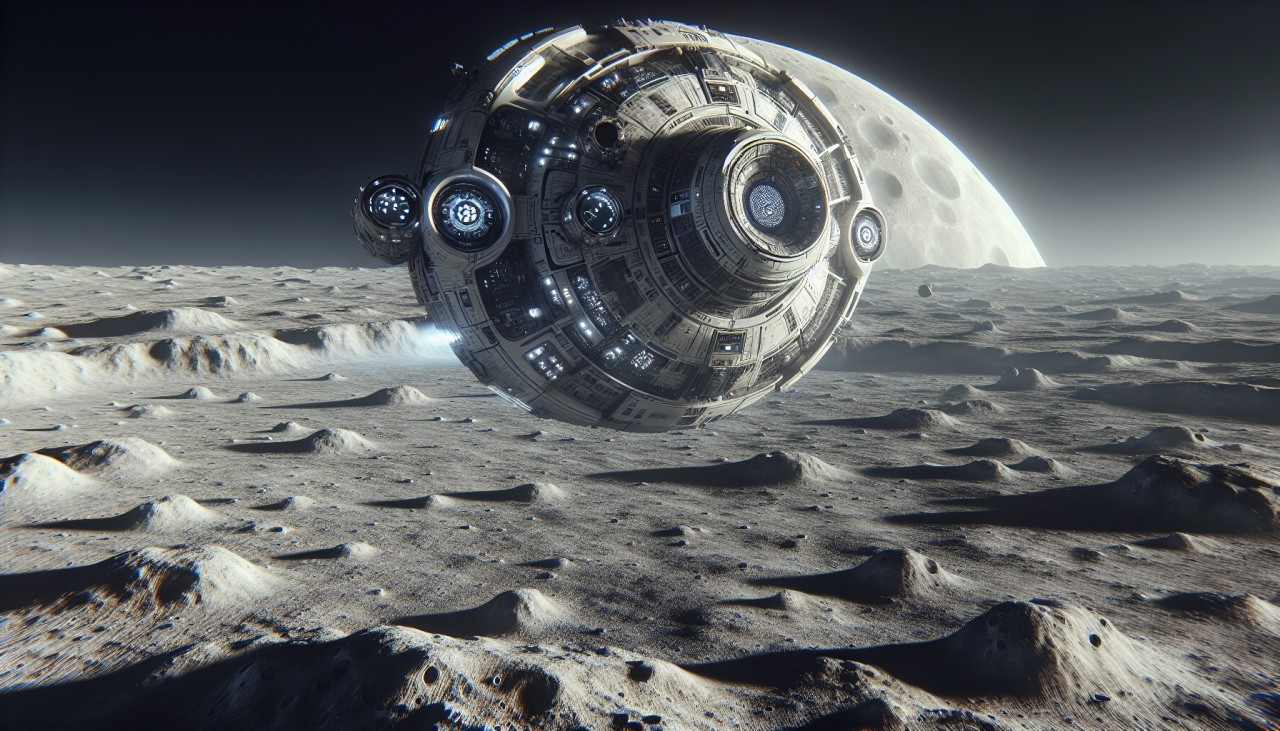
Spacecraft navigation has undergone remarkable transformations in recent years, driven by technological innovations and the increasing complexity of space missions. As humanity sets its sights on returning to the Moon, venturing to Mars, and exploring the outer reaches of the solar system, precise and reliable navigation systems have become paramount. This article delves into the latest advancements in spacecraft navigation, highlighting key developments that are shaping the future of space exploration.
Advancements in Global Navigation Satellite Systems (GNSS)
Global Navigation Satellite Systems (GNSS), such as the United States' GPS, the European Union's Galileo, and India's NavIC, have long been instrumental in providing positioning, navigation, and timing (PNT) services to spacecraft. These systems have been crucial for missions in low Earth orbit (LEO), where spacecraft can rely on GNSS signals for accurate navigation data. However, as missions venture beyond LEO, the reliance on GNSS becomes challenging due to signal attenuation and the need for specialized equipment.
In response to these challenges, NASA has been actively developing and testing GNSS capabilities for deep-space missions. In 2019, NASA demonstrated GNSS navigation at distances halfway to the Moon, showcasing the potential of GNSS for lunar missions. Building on this success, the Lunar GNSS Receiver Experiment (LuGRE) was conducted in January 2025, landing on the Moon's Mare Crisium basin. On March 2, 2025, LuGRE received the first GNSS fix ever recorded on the lunar surface from both GPS and Galileo satellites. This achievement marks a significant milestone in lunar exploration, paving the way for future missions to utilize GNSS for precise lunar navigation. nasa.gov
Emergence of Lunar Communication and Navigation Systems
As lunar exploration intensifies, the need for robust communication and navigation infrastructure has become evident. The European Space Agency (ESA) has initiated the Moonlight programme, aiming to establish a lunar communication and navigation network. This initiative seeks to provide continuous telecommunications between Earth and the Moon, as well as lunar satellite navigation services, facilitating future lunar projects. The Moonlight programme is a partnership between ESA and an industry consortium led by Telespazio, with support from the UK Space Agency and the Italian Space Agency. The goal is to create a sustainable and efficient communication and navigation framework to support a sustained human presence on the Moon. en.wikipedia.org
Advancements in Autonomous Navigation Systems
The complexity of space missions, especially those involving multiple spacecraft or proximity operations, has led to the development of autonomous navigation systems. These systems enable spacecraft to navigate and perform operations without direct human intervention, enhancing mission efficiency and safety.
One notable advancement is the Multi-spacecraft Autonomous Positioning System (MAPS) developed by NASA. MAPS is networked computer navigation software that embeds navigation and state information into data packets transmitted by spacecraft and ground stations. This approach allows spacecraft to estimate their position by analyzing signals from various transmitters, facilitating autonomous navigation in complex environments. MAPS was successfully tested on the International Space Station in 2018, demonstrating its potential for future missions. en.wikipedia.org
Integration of Artificial Intelligence in Navigation Systems
Artificial Intelligence (AI) is increasingly being integrated into spacecraft navigation systems to enhance accuracy and adaptability. AI algorithms can process large volumes of data from various sensors, such as star trackers, gyroscopes, and accelerometers, to determine a spacecraft's position, velocity, and attitude. Machine learning techniques enable these systems to learn from historical data and adapt to changing environmental conditions, improving navigation precision over time. This integration of AI is particularly beneficial for missions in dynamic and unpredictable environments, such as planetary exploration. numberanalytics.com
Innovations in Deep-Space Navigation
Navigating deep space presents unique challenges due to the vast distances and the absence of GNSS signals. Traditional methods, such as using the Deep Space Network (DSN) for tracking, are limited by signal attenuation and the need for extensive ground infrastructure. To address these challenges, researchers have proposed innovative approaches like radiometric interferometry using geostationary satellites. This method involves cross-correlating radio signals from spacecraft with those received by geostationary Earth orbit (GEO) satellites, extending the effective baseline and providing continuous visibility to deep-space targets. Theoretical analyses indicate that this approach can achieve angular errors comparable to traditional methods while eliminating atmospheric distortions, making it a promising solution for future deep-space navigation. arxiv.org
Advancements in Sensor Technology
The accuracy and reliability of spacecraft navigation are heavily dependent on sensor technology. Recent developments have led to the creation of more precise and resilient sensors capable of operating in the harsh conditions of space. For instance, the integration of advanced gyroscopes and accelerometers has improved the measurement of spacecraft orientation and acceleration, enhancing the overall navigation performance. Additionally, the development of high-accuracy atomic clocks has bolstered the precision of timing measurements, which are crucial for accurate positioning. These advancements in sensor technology are fundamental to the success of current and future space missions.
Conclusion
The field of spacecraft navigation is experiencing rapid advancements, driven by technological innovations and the evolving demands of space exploration. From the successful integration of GNSS capabilities on the lunar surface to the development of autonomous navigation systems and the application of AI, these innovations are enhancing the precision, reliability, and autonomy of spacecraft navigation. As missions become more complex and venture further into the cosmos, these advancements will play a pivotal role in ensuring the success of future space endeavors.
Key Takeaways
- NASA's Lunar GNSS Receiver Experiment (LuGRE) achieved the first GNSS fix on the Moon's surface in March 2025.
- The European Space Agency's Moonlight programme aims to establish a lunar communication and navigation network to support sustained human presence on the Moon.
- NASA's Multi-spacecraft Autonomous Positioning System (MAPS) enables spacecraft to autonomously estimate their position using networked data, enhancing mission efficiency.
- Artificial Intelligence integration in navigation systems allows spacecraft to adapt to changing environments, improving accuracy and reliability.
- Innovative methods like radiometric interferometry using geostationary satellites offer promising solutions for deep-space navigation challenges.