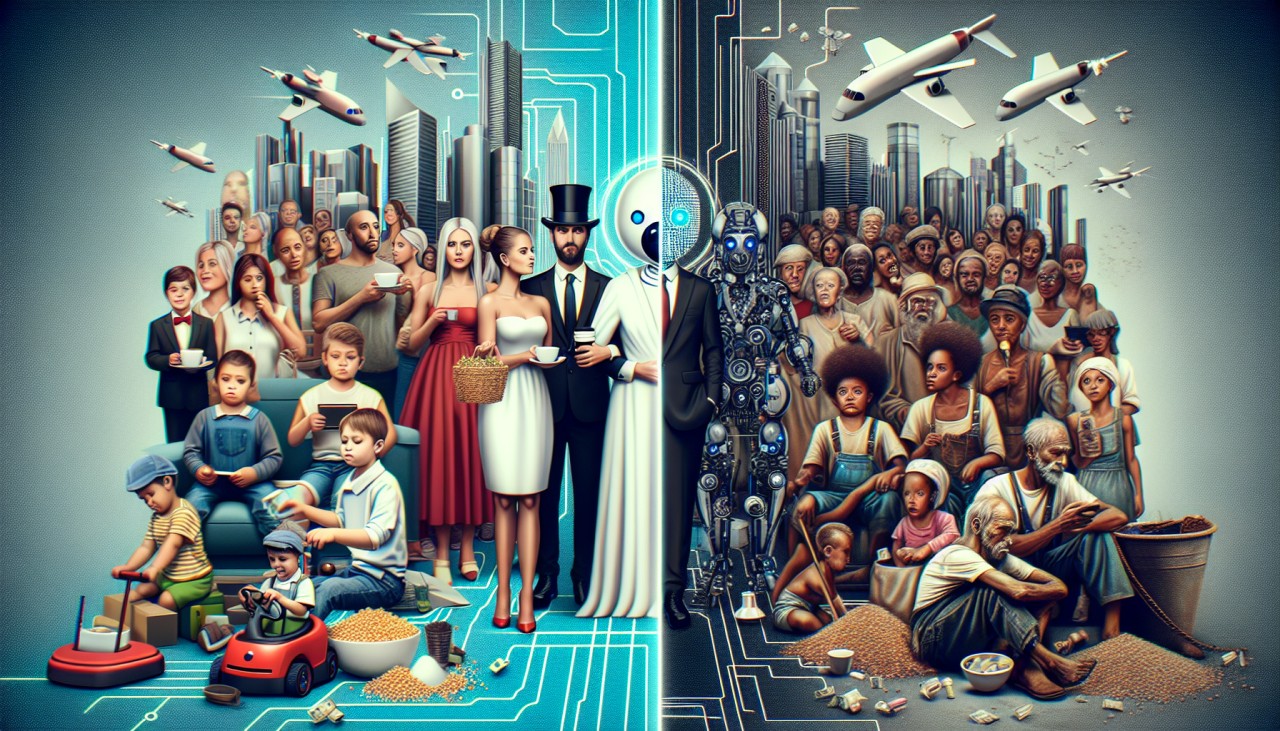
Artificial Intelligence (AI) has emerged as a transformative force, reshaping industries, economies, and daily life. Its potential to drive innovation and efficiency is unparalleled, yet this rapid advancement carries significant risks, particularly concerning wealth inequality. As AI technologies evolve, they threaten to deepen existing economic disparities, creating a chasm between those who can harness AI's benefits and those left behind.
One of the most pressing concerns is job displacement. AI's capacity to automate tasks traditionally performed by humans is leading to the erosion of middle-skill jobs. Roles in manufacturing, administrative support, and customer service are increasingly susceptible to automation, leaving workers with limited options for alternative employment. A report by McKinsey highlights that AI could automate half of all jobs that don't require a four-year degree and pay over $42,000 annually, sectors where Black workers are disproportionately employed. axios.com
This trend not only threatens individual livelihoods but also exacerbates systemic inequalities. The loss of middle-income jobs contributes to a hollowing out of the workforce, where low-skill workers face unemployment, and high-skill workers enjoy wage premiums. This polarization reduces social mobility and increases economic stratification, as seen in the U.S., where the decline of middle-skill manufacturing jobs has led to wage stagnation for the working class. linkedin.com
Moreover, AI systems often inherit and amplify biases present in their training data. Algorithmic bias can perpetuate existing social prejudices, leading to unfair outcomes in critical areas such as hiring, lending, and law enforcement. For instance, AI-driven hiring tools have been found to favor candidates with certain surnames, reflecting implicit markers of social status and reinforcing intergenerational inequality. arxiv.org
The concentration of economic power is another significant risk. Historically, technological revolutions have led to uneven gains, often increasing inequality before societies adjust. AI could supercharge returns for skilled workers, tech-savvy firms, and capital owners, while displaced workers and less tech-enabled regions fall further behind. A report by Boston Common Asset Management warns that without intervention, AI's economic rewards could be concentrated among a handful of big tech firms and their investors, leading to social and political backlash. bostoncommonasset.com
The United Nations Development Program (UNDP) also highlights the global dimension of this issue. A report released in December 2025 warns that without targeted efforts, AI could widen global inequalities, favoring wealthy nations while leaving disadvantaged communities behind. The report emphasizes the importance of prioritizing people over technology and calls for investment in education, digital infrastructure, and regulatory frameworks to address ethical, privacy, and cybersecurity risks. apnews.com
Addressing these challenges requires a multifaceted approach. Policymakers must implement measures to mitigate job displacement, such as investing in reskilling and upskilling programs to prepare workers for the evolving job market. Ensuring that AI systems are developed and deployed ethically is crucial to prevent the reinforcement of existing biases. Additionally, promoting equitable access to AI technologies can help bridge the digital divide and prevent the concentration of economic power.
In conclusion, while AI holds immense potential to drive progress, it also poses significant risks to wealth equality. Without proactive and inclusive strategies, AI could deepen existing economic disparities, leading to social and political instability. It is imperative that society addresses these challenges to ensure that AI serves as a tool for equitable advancement rather than a catalyst for further division.
Artificial Intelligence (AI) has rapidly evolved from a niche technological advancement to a pervasive force influencing nearly every aspect of modern life. Its integration into sectors such as healthcare, finance, education, and transportation promises unprecedented efficiency and innovation. However, this swift progression brings with it profound concerns, particularly regarding the exacerbation of wealth inequality. As AI technologies advance, they risk deepening the chasm between the affluent and the economically disadvantaged, creating a society where the benefits of innovation are unequally distributed.
A primary concern is the displacement of workers due to automation. AI's capability to perform tasks traditionally executed by humans is leading to the obsolescence of numerous job categories. Roles in manufacturing, administrative support, and customer service are increasingly susceptible to automation, leaving workers with limited options for alternative employment. A report by McKinsey highlights that AI could automate half of all jobs that don't require a four-year degree and pay over $42,000 annually, sectors where Black workers are disproportionately employed. axios.com
This trend not only threatens individual livelihoods but also exacerbates systemic inequalities. The loss of middle-income jobs contributes to a hollowing out of the workforce, where low-skill workers face unemployment, and high-skill workers enjoy wage premiums. This polarization reduces social mobility and increases economic stratification, as seen in the U.S., where the decline of middle-skill manufacturing jobs has led to wage stagnation for the working class. linkedin.com
Moreover, AI systems often inherit and amplify biases present in their training data. Algorithmic bias can perpetuate existing social prejudices, leading to unfair outcomes in critical areas such as hiring, lending, and law enforcement. For instance, AI-driven hiring tools have been found to favor candidates with certain surnames, reflecting implicit markers of social status and reinforcing intergenerational inequality. arxiv.org
The concentration of economic power is another significant risk. Historically, technological revolutions have led to uneven gains, often increasing inequality before societies adjust. AI could supercharge returns for skilled workers, tech-savvy firms, and capital owners, while displaced workers and less tech-enabled regions fall further behind. A report by Boston Common Asset Management warns that without intervention, AI's economic rewards could be concentrated among a handful of big tech firms and their investors, leading to social and political backlash. bostoncommonasset.com
The United Nations Development Program (UNDP) also highlights the global dimension of this issue. A report released in December 2025 warns that without targeted efforts, AI could widen global inequalities, favoring wealthy nations while leaving disadvantaged communities behind. The report emphasizes the importance of prioritizing people over technology and calls for investment in education, digital infrastructure, and regulatory frameworks to address ethical, privacy, and cybersecurity risks. apnews.com
Addressing these challenges requires a multifaceted approach. Policymakers must implement measures to mitigate job displacement, such as investing in reskilling and upskilling programs to prepare workers for the evolving job market. Ensuring that AI systems are developed and deployed ethically is crucial to prevent the reinforcement of existing biases. Additionally, promoting equitable access to AI technologies can help bridge the digital divide and prevent the concentration of economic power.
In conclusion, while AI holds immense potential to drive progress, it also poses significant risks to wealth equality. Without proactive and inclusive strategies, AI could deepen existing economic disparities, leading to social and political instability. It is imperative that society addresses these challenges to ensure that AI serves as a tool for equitable advancement rather than a catalyst for further division.
Key Takeaways
- AI's rapid advancement poses significant risks of exacerbating wealth inequality.
- Job displacement due to automation threatens middle-income workers, particularly in sectors like manufacturing and customer service.
- Algorithmic bias in AI systems can perpetuate existing social prejudices, leading to unfair outcomes in critical areas such as hiring and lending.
- The concentration of economic power among tech firms and investors could lead to social and political backlash if AI's economic rewards are not equitably distributed.
- Addressing these challenges requires a multifaceted approach, including investment in reskilling programs, ethical AI development, and promoting equitable access to AI technologies.