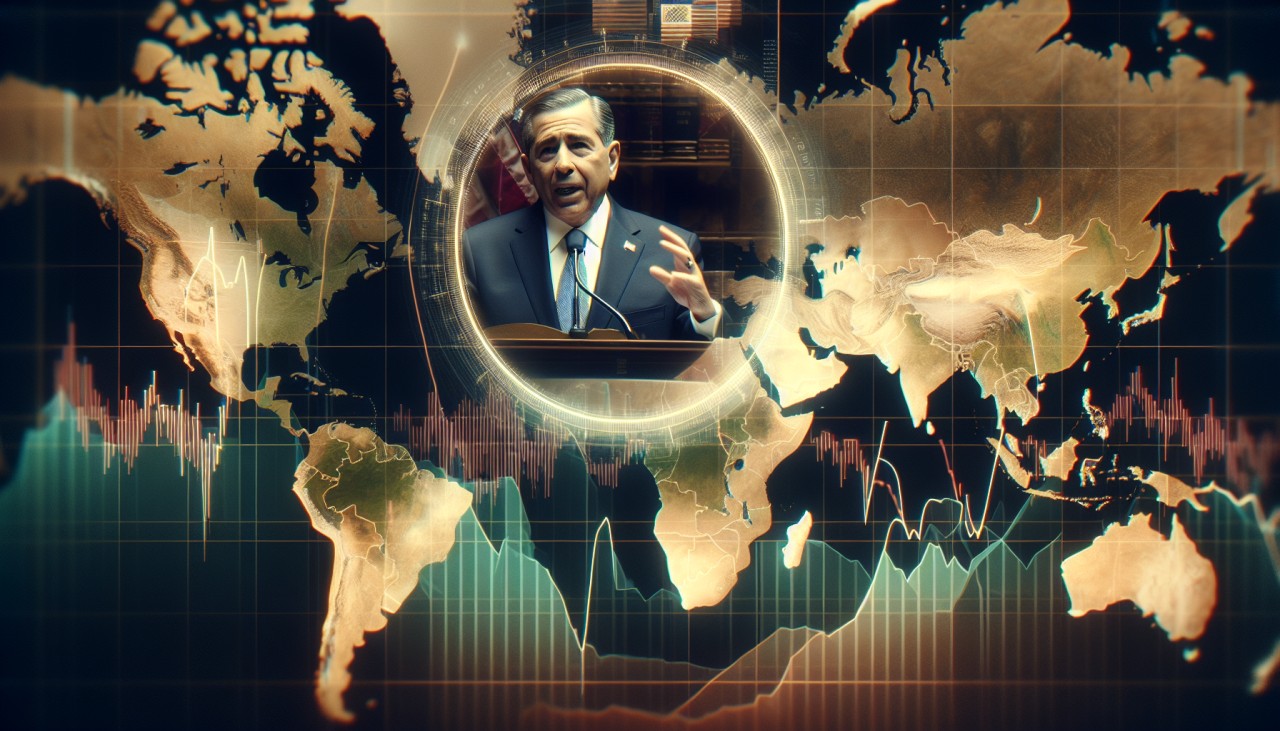
On April 2, 2026, U.S. stock futures experienced a notable decline following President Trump's national address, which failed to provide clarity on the U.S.-Israeli conflict in Iran. Futures tied to the S&P 500 fell 1.3%, Nasdaq 100 futures sank 1.6%, and Dow Jones Industrial Average futures dropped 1.1%. The market's reaction underscores the sensitivity of investors to geopolitical developments, particularly those involving major oil-producing regions. The Strait of Hormuz, a critical chokepoint for global oil shipments, remains a focal point of concern, as its closure or disruption could lead to significant fluctuations in energy prices and broader market instability.
The market's response to geopolitical events is not unprecedented. Historically, periods of conflict in the Middle East have led to increased volatility in global markets. For instance, during the Gulf War in the early 1990s and the Iraq War in the early 2000s, markets experienced sharp declines due to fears of oil supply disruptions and broader economic repercussions. The current situation shares similarities, with investors closely monitoring the conflict's progression and its potential impact on global trade and economic growth.
In addition to geopolitical concerns, market participants are also evaluating the broader economic implications of the conflict. The U.S. economy has shown signs of resilience, with steady growth in sectors such as technology and consumer goods. However, the ongoing conflict poses risks to this growth trajectory. Disruptions in oil supply could lead to higher energy costs, affecting both consumers and businesses. Moreover, heightened uncertainty may dampen consumer and business confidence, potentially leading to reduced spending and investment.
Analysts emphasize the importance of diversification in investment portfolios during periods of geopolitical uncertainty. By spreading investments across various asset classes and geographic regions, investors can mitigate the impact of adverse events in any single market. Additionally, maintaining a long-term investment perspective can help weather short-term market fluctuations. It's also advisable for investors to stay informed through reputable news sources and consider consulting with financial advisors to make informed decisions tailored to their individual financial goals and risk tolerance.
In conclusion, the U.S. stock market's decline on April 2, 2026, reflects investor apprehension regarding the unresolved conflict in Iran. While the market has demonstrated resilience in the past, ongoing geopolitical tensions present challenges that require careful monitoring and strategic planning. Investors are encouraged to stay informed, diversify their portfolios, and adopt a long-term investment approach to navigate the complexities of the current economic landscape.
Key Takeaways
- U.S. stock futures declined following President Trump's national address on the Iran conflict.
- The market is sensitive to geopolitical developments, especially in major oil-producing regions.
- Diversification and a long-term investment perspective are recommended during periods of uncertainty.
- Staying informed and consulting with financial advisors can aid in making informed investment decisions.
- Ongoing geopolitical tensions present challenges that require careful monitoring and strategic planning.