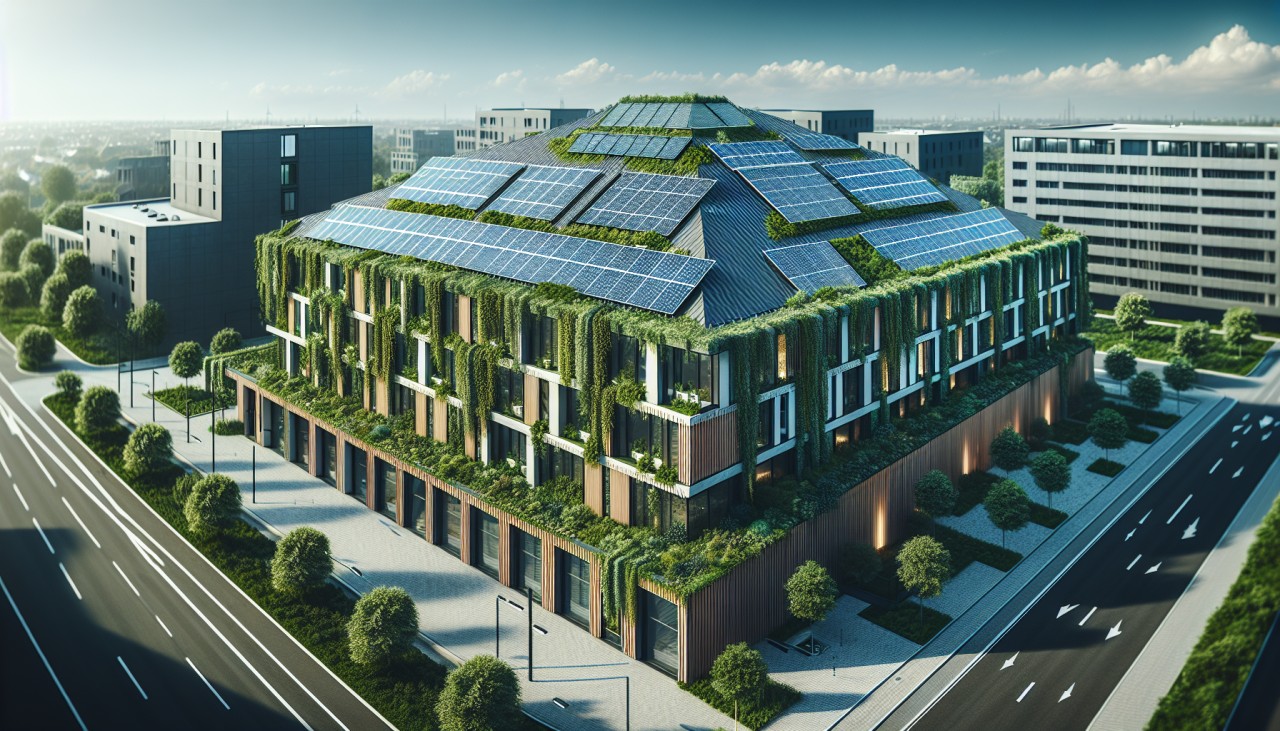
In recent years, the construction industry has witnessed a transformative shift towards sustainability, with net zero buildings at the forefront of this movement. These structures are designed to produce as much energy as they consume annually, effectively balancing energy consumption with renewable energy generation. This approach not only reduces carbon emissions but also offers substantial economic advantages, making it a compelling choice for developers, homeowners, and businesses alike.
The concept of net zero buildings is rooted in the principle of energy efficiency and renewable energy integration. By incorporating advanced insulation materials, high-performance windows, and airtight construction techniques, these buildings minimize energy loss. On-site renewable energy systems, such as solar panels and wind turbines, then generate clean energy to offset the building's energy consumption. This holistic approach ensures that the building operates with a minimal carbon footprint, contributing positively to environmental conservation efforts.
The adoption of net zero buildings is gaining momentum globally, driven by a combination of regulatory mandates, technological advancements, and growing environmental awareness. Governments worldwide are implementing stricter energy efficiency standards and offering incentives for sustainable construction practices. For instance, the European Union has set ambitious targets for reducing greenhouse gas emissions, prompting a surge in net zero building projects across member states. Similarly, in the United States, federal and state policies are increasingly favoring green building initiatives, further accelerating the market for net zero constructions.
Technological innovations play a pivotal role in the realization of net zero buildings. The integration of smart technologies, such as Internet of Things (IoT) devices and artificial intelligence (AI), enables real-time monitoring and optimization of energy usage. Building management systems equipped with AI can predict energy consumption patterns and adjust settings to enhance efficiency. Additionally, advancements in renewable energy technologies, including more efficient solar panels and energy storage solutions, have made it increasingly feasible to achieve net zero performance in buildings of various sizes and functions.
Economically, net zero buildings offer compelling benefits. While the initial investment may be higher due to the incorporation of advanced materials and technologies, the long-term savings are significant. Reduced energy bills, lower maintenance costs, and potential tax incentives contribute to a favorable return on investment. Moreover, as energy prices continue to rise and the cost of renewable energy technologies decreases, the financial viability of net zero buildings becomes even more attractive.
The market for net zero buildings is experiencing rapid growth. According to a report by Persistence Market Research, the global net zero energy buildings market is projected to reach US$198.1 billion by 2033, growing at a compound annual growth rate (CAGR) of 19.8% between 2026 and 2033. This growth is fueled by stricter energy-efficiency regulations, increasing renewable energy adoption, and rising demand for sustainable construction practices worldwide. prnewswire.com
In the United States, the net zero building market is also expanding rapidly. A report by Buildings.com indicates that while net-zero buildings currently represent just 0.023% of global buildings, the segment is gaining strong momentum. The report projects over 5,500 commercial and residential net-zero buildings globally by 2027, up from 1,200 in 2022. This growth signals the accelerating transition toward high-performance real estate. buildings.com
The benefits of net zero buildings extend beyond environmental and economic factors. These structures often provide healthier living and working environments. Enhanced indoor air quality, natural lighting, and thermal comfort contribute to the well-being of occupants. Additionally, the integration of green spaces and biophilic design elements fosters a connection with nature, promoting mental and physical health.
Despite the numerous advantages, challenges remain in the widespread adoption of net zero buildings. High upfront costs, limited availability of skilled labor, and regulatory hurdles can impede progress. However, as technology advances and the market matures, these obstacles are expected to diminish. Collaborative efforts among architects, engineers, policymakers, and the private sector are essential to overcome these challenges and accelerate the transition to a sustainable built environment.
In conclusion, net zero buildings represent a significant advancement in sustainable architecture, offering a viable solution to the pressing issues of climate change and resource depletion. Through a combination of energy efficiency, renewable energy integration, and innovative design, these buildings not only reduce environmental impact but also provide economic and health benefits to their occupants. As the global community continues to prioritize sustainability, the adoption of net zero buildings is poised to become a standard practice in the construction industry, paving the way for a greener and more sustainable future.
The future of net zero buildings is promising, with ongoing research and development driving continuous improvements in technology and design. Emerging trends such as the use of advanced materials, smart grids, and decentralized energy systems are set to further enhance the performance and feasibility of net zero buildings. Moreover, the increasing emphasis on circular economy principles, which focus on designing for disassembly and material reuse, aligns with the goals of net zero buildings by promoting sustainability throughout the building's lifecycle. memberofarchitecture.com
As the demand for sustainable construction grows, the net zero building market is expected to experience significant expansion. The integration of renewable energy sources, coupled with advancements in energy storage and management systems, will play a crucial role in achieving net zero performance. Additionally, the development of supportive policies and incentives will further accelerate the adoption of net zero buildings, making them a mainstream choice in the construction industry.
In summary, net zero buildings are at the forefront of the sustainable architecture movement, offering a comprehensive solution to environmental challenges while providing economic and health benefits. Through continued innovation, supportive policies, and collaborative efforts, the vision of a sustainable built environment powered by net zero buildings is becoming an increasingly attainable reality.
Key Takeaways
- Net zero buildings balance energy consumption with renewable energy generation, reducing carbon emissions and operational costs.
- The global net zero energy buildings market is projected to reach US$198.1 billion by 2033, growing at a CAGR of 19.8% between 2026 and 2033.
- Net zero buildings offer healthier living and working environments through enhanced indoor air quality and natural lighting.
- Challenges to widespread adoption include high upfront costs, limited skilled labor, and regulatory hurdles, but these are expected to diminish over time.
- Emerging trends such as advanced materials, smart grids, and decentralized energy systems are set to enhance the performance and feasibility of net zero buildings.