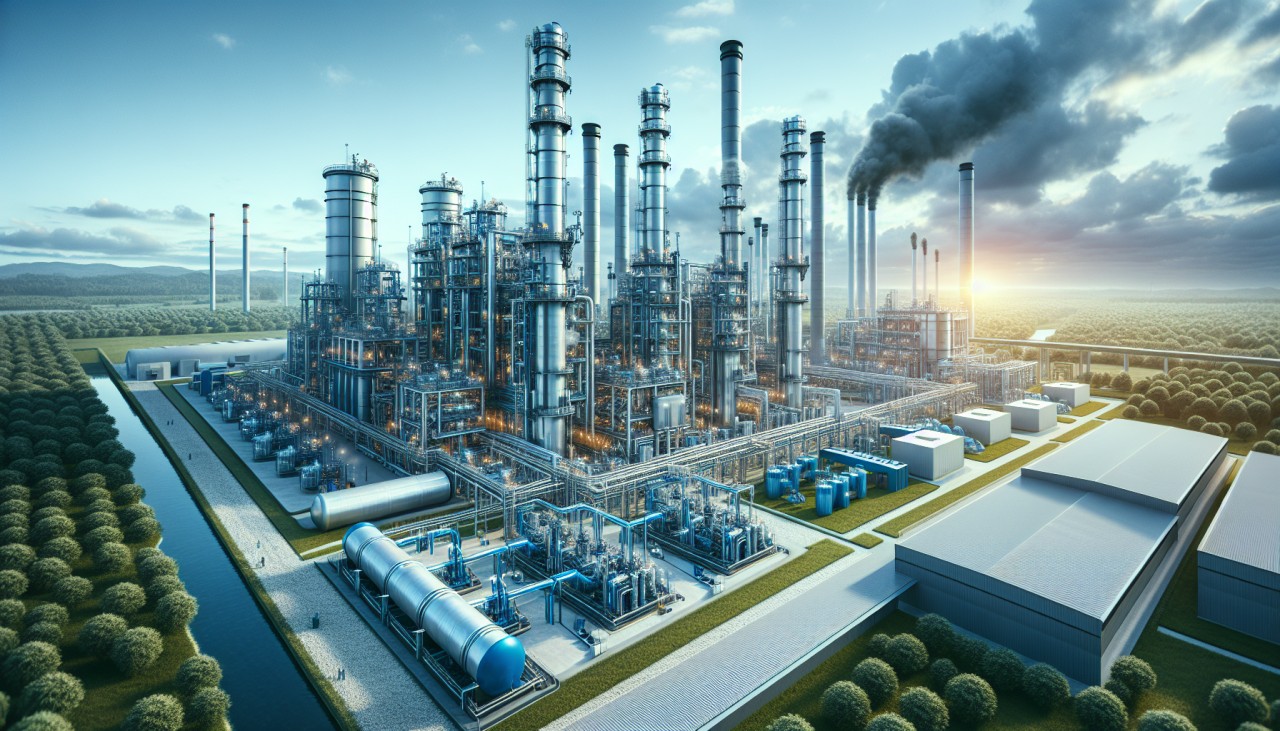
In the quest for sustainable energy solutions, hydrogen has emerged as a promising candidate, particularly in its "blue" form. Blue hydrogen is produced by extracting hydrogen from natural gas through a process called steam methane reforming (SMR), coupled with carbon capture and storage (CCS) technologies to mitigate the associated carbon dioxide (CO₂) emissions. Proponents argue that blue hydrogen offers a transitional pathway to a low-carbon economy, leveraging existing natural gas infrastructure while reducing greenhouse gas emissions. However, recent studies and analyses have cast doubt on the environmental benefits and economic feasibility of blue hydrogen, raising critical questions about its role in the global energy transition.
A comprehensive techno-economic analysis by Curcio (2025) evaluated various hydrogen production pathways, including gray, blue, and green hydrogen. The study found that while gray hydrogen remains the most cost-effective option today, it is increasingly constrained by carbon pricing mechanisms. Blue hydrogen, with production costs ranging from $2.00 to $3.50 per kilogram, presents a transitional solution but is heavily dependent on the costs of CCS technologies, natural gas price volatility, and regulatory support. In contrast, green hydrogen, produced via water electrolysis powered by renewable energy sources, is currently more expensive but benefits from declining renewable electricity costs and government incentives. The analysis underscores the need for continued cost reductions, policy incentives, and infrastructure expansion for hydrogen to play a significant role in achieving net-zero emissions by 2035.
Environmental assessments have also raised concerns about the efficacy of CCS in blue hydrogen production. A meta-study by Curcio (2025) highlighted that while CCS can reduce the carbon intensity of gray hydrogen by approximately 60%, it increases the levelized cost of hydrogen (LCOH) by about 30%. Moreover, the study emphasized that achieving carbon capture rates between 60% and 80% using technologies like MDEA-based CCS appears to be a Pareto-optimal choice for SMR processes. These findings suggest that while CCS can mitigate some emissions, it may not be sufficient to make blue hydrogen a truly low-carbon alternative, especially when considering the full lifecycle emissions and potential methane leaks associated with natural gas extraction and transportation.
The environmental impact of blue hydrogen is further complicated by methane emissions. Methane, a potent greenhouse gas, can leak during natural gas extraction, processing, and transportation. A study by the Environmental Defense Fund (2024) found that high hydrogen emissions could reduce the climate benefits of blue hydrogen by up to 50% compared to fossil fuels. This underscores the importance of stringent monitoring and mitigation strategies to address methane leaks in the blue hydrogen supply chain. Without effective measures to control methane emissions, the purported climate benefits of blue hydrogen may be significantly diminished, potentially making it a less favorable option compared to other low-carbon alternatives.
Economically, the scalability of blue hydrogen faces significant challenges. The infrastructure required for large-scale CCS is complex and costly, involving the capture, transportation, and storage of CO₂. The development of such infrastructure necessitates substantial investment and long-term commitment, which may not be feasible without strong policy support and clear regulatory frameworks. Additionally, the reliance on natural gas prices introduces volatility into the economic viability of blue hydrogen. Fluctuations in natural gas prices can impact production costs, making blue hydrogen less competitive compared to other hydrogen production methods, particularly as renewable energy sources become more cost-effective.
In light of these challenges, some experts argue that the focus should shift towards green hydrogen as a more sustainable and economically viable solution. Green hydrogen, produced through electrolysis powered by renewable energy sources, offers a pathway to decarbonize sectors that are difficult to electrify, such as heavy industry and transportation. While green hydrogen currently faces higher production costs, ongoing advancements in renewable energy technologies and electrolyzer efficiency are expected to drive down costs over time. Moreover, policy incentives and investments in renewable energy infrastructure can accelerate the adoption of green hydrogen, positioning it as a cornerstone of the global energy transition.
In conclusion, while blue hydrogen presents an attractive proposition as a low-carbon alternative to traditional hydrogen, its environmental and economic challenges cannot be overlooked. The effectiveness of CCS technologies, the impact of methane emissions, and the scalability of infrastructure are critical factors that influence the viability of blue hydrogen. As the energy sector continues to evolve, it is imperative to critically assess the role of blue hydrogen and consider a diversified approach that includes both blue and green hydrogen pathways, alongside other renewable energy solutions, to achieve a sustainable and low-carbon future.
Key Takeaways
- Blue hydrogen is produced from natural gas using steam methane reforming (SMR) combined with carbon capture and storage (CCS) technologies.
- Recent studies question the environmental benefits of blue hydrogen due to potential methane emissions and the effectiveness of CCS.
- Economically, blue hydrogen faces challenges related to infrastructure costs and reliance on natural gas price volatility.
- Green hydrogen, produced via electrolysis powered by renewable energy, is emerging as a more sustainable and cost-effective alternative.
- A diversified approach, integrating both blue and green hydrogen, is essential for a successful transition to a low-carbon economy.