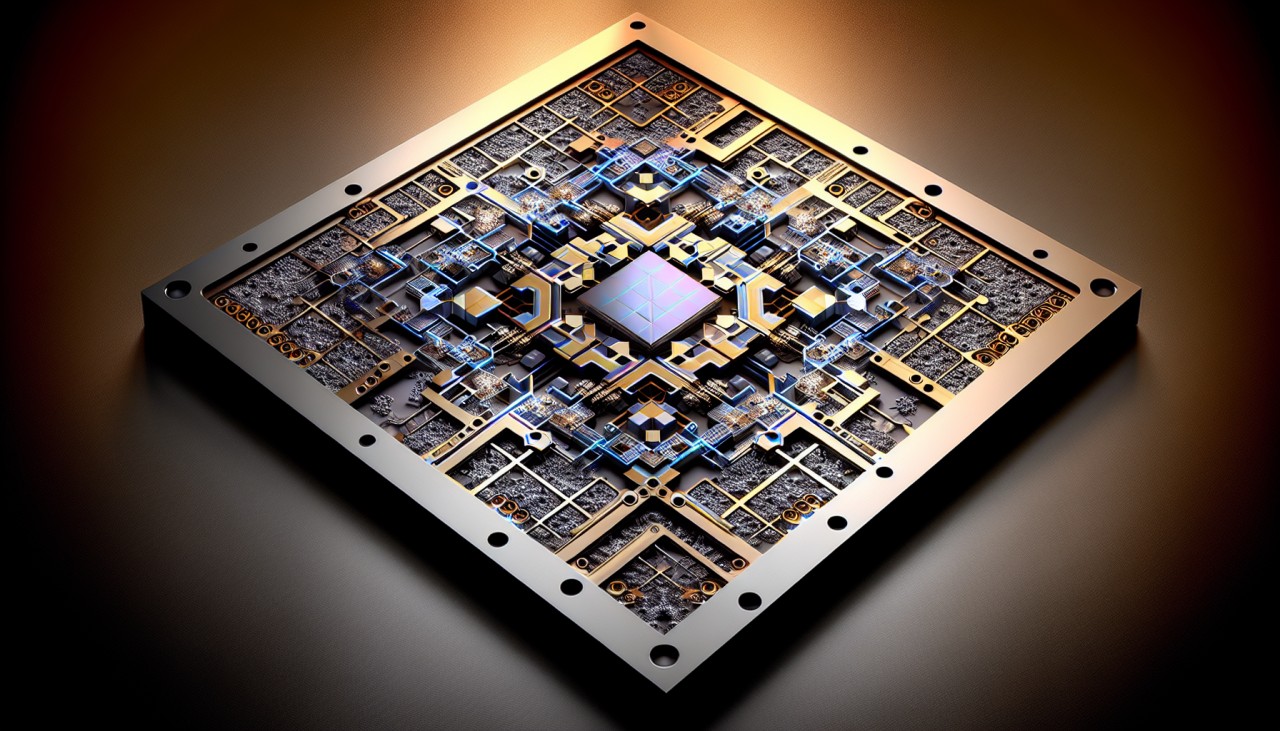
Superconducting qubits have emerged as a leading technology in the quest for practical quantum computing. These qubits leverage the principles of superconductivity to create quantum bits capable of existing in multiple states simultaneously, a phenomenon known as superposition. This property allows quantum computers to process a vast number of possibilities concurrently, offering the potential to solve complex problems far more efficiently than classical computers.
A significant challenge in quantum computing is maintaining the coherence of qubits over time. Coherence refers to the ability of a qubit to retain its quantum state without interference from external factors, which is crucial for performing accurate computations. Recent advancements have led to superconducting qubits with coherence times exceeding 1 millisecond, a substantial improvement over previous generations. For instance, Princeton engineers developed a superconducting qubit that lasts over 1 millisecond, three times longer than the best versions reported in laboratory settings. This enhancement brings quantum computers closer to practical applications by reducing the likelihood of errors during computations. engineering.princeton.edu
Fabrication techniques have also seen remarkable progress. The development of superconducting qubits using standard semiconductor fabrication processes has paved the way for scalable quantum computing. Researchers have demonstrated CMOS-compatible, wafer-scale processing of superconducting qubits, achieving energy relaxation times exceeding 200 microseconds. This approach not only improves qubit performance but also aligns with existing semiconductor manufacturing infrastructure, facilitating the integration of quantum computing technologies into current electronic systems. arxiv.org
In terms of system integration, companies like IBM and Google have made significant strides. IBM's Quantum System Two, unveiled in December 2023, is the first modular utility-scaled quantum computer system, featuring three IBM Quantum Heron processors. This modularity allows for scalability and future upgrades, positioning IBM at the forefront of quantum computing infrastructure. en.wikipedia.org Similarly, Google's Willow processor, announced in December 2024, comprises 105 superconducting transmon qubits and has demonstrated the ability to reduce errors exponentially as more qubits are added, achieving below-threshold quantum error correction. en.wikipedia.org
These developments are not only advancing the field of quantum computing but also have practical implications for various industries. The enhanced coherence times and improved fabrication methods contribute to the development of more reliable and scalable quantum computers. This progress could revolutionize fields such as cryptography, materials science, and complex system simulations, leading to breakthroughs in drug discovery, optimization problems, and secure communication protocols. As quantum computing continues to evolve, superconducting qubits remain a central focus, driving the transition from theoretical concepts to tangible, impactful technologies.
The journey of superconducting qubits from theoretical constructs to practical applications underscores the collaborative efforts of researchers, engineers, and industry leaders. Ongoing research aims to further enhance qubit performance, reduce error rates, and integrate quantum computing seamlessly into existing technological frameworks. As these challenges are addressed, the vision of harnessing quantum mechanics for real-world problem-solving becomes increasingly attainable, promising a new era of computational capabilities.
Key Takeaways
- Superconducting qubits utilize superconductivity to achieve quantum superposition, enabling efficient processing of complex computations.
- Recent advancements have significantly improved qubit coherence times, enhancing the reliability of quantum computations.
- CMOS-compatible fabrication techniques have streamlined the manufacturing process, facilitating the integration of quantum computing with existing semiconductor technologies.
- Modular quantum computing systems, like IBM's Quantum System Two, offer scalability and future upgradeability, supporting the growth of quantum computing infrastructure.
- Practical applications of superconducting qubits are emerging in fields such as cryptography, materials science, and complex system simulations, indicating the transformative potential of quantum computing.
Example
The advancements in superconducting qubits have led to the development of quantum computers capable of simulating complex molecular interactions. This capability is revolutionizing drug discovery by enabling researchers to model and predict the behavior of pharmaceutical compounds at the quantum level, significantly accelerating the development of new medications. Additionally, the enhanced computational power of quantum systems is improving optimization algorithms used in logistics and supply chain management, leading to more efficient operations and cost savings across various industries.