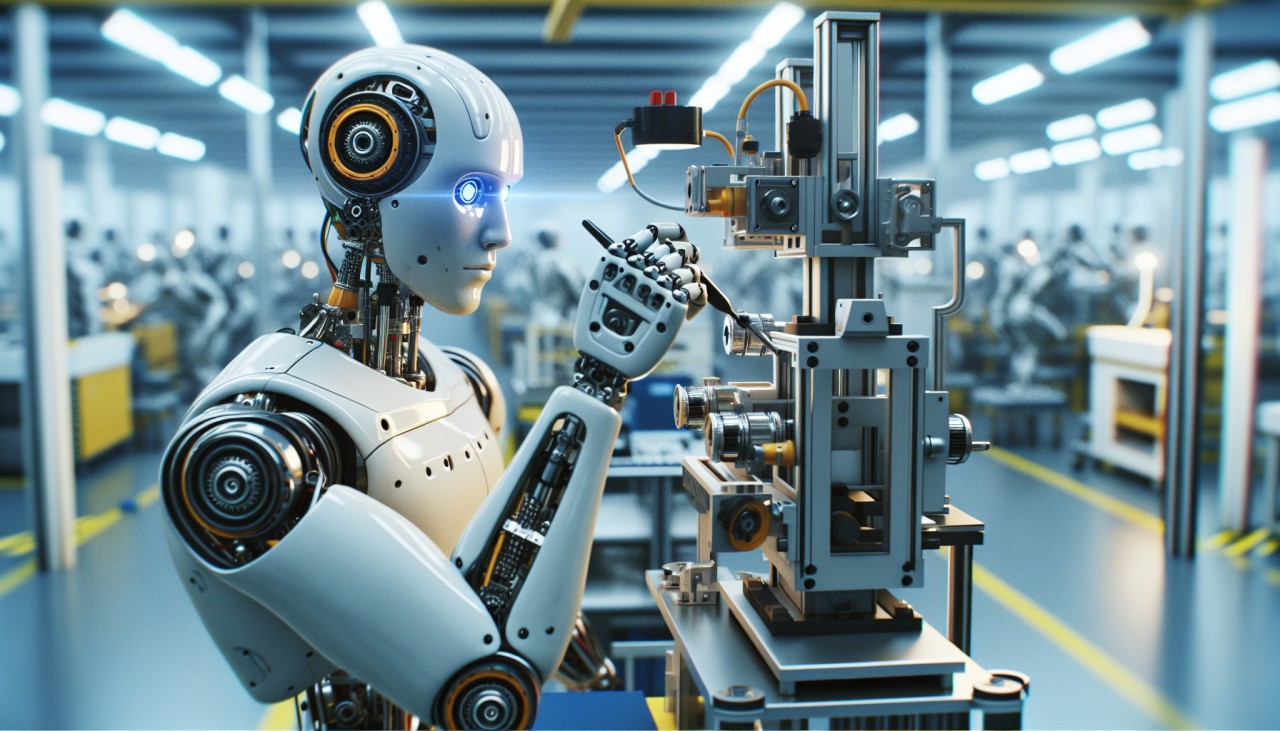
The integration of Artificial Intelligence (AI) into robotics has ushered in a transformative era, where machines are not merely programmed to perform repetitive tasks but are capable of learning, adapting, and making autonomous decisions. This evolution is reshaping industries, enhancing efficiency, and opening new frontiers in technology. The fusion of AI and robotics is not just a trend but a paradigm shift that is redefining the capabilities of machines and their roles in society.
In manufacturing, AI-powered robots are revolutionizing production lines. Companies like Hyundai Motor Group are at the forefront of this transformation. In January 2026, Hyundai announced plans to mass-produce 30,000 humanoid robots annually by 2028, aiming to integrate them into their factories to assist in manufacturing processes. This initiative leverages Boston Dynamics, Hyundai’s robotics subsidiary, which has developed humanoid robots capable of autonomous movement and learning from human behavior. These robots are expected to support the assembly of electric and hybrid vehicles, such as the Ioniq 5 and Ioniq 9. This move signifies a significant step in advancing AI and robotics integration in industrial settings, highlighting the potential of AI to enhance manufacturing efficiency and flexibility.
Similarly, Figure AI, an American robotics company founded in 2022, is developing AI-powered humanoid robots designed for manual labor, initially targeting the logistics and warehousing sectors. In February 2024, Figure AI secured $675 million in venture capital funding from a consortium that includes Jeff Bezos, Microsoft, Nvidia, Intel, and the startup-funding divisions of Amazon and OpenAI. The funding valued the company at $2.6 billion. This substantial investment underscores the growing confidence in AI-driven robotics and their potential to revolutionize industries by automating complex tasks and improving operational efficiency.
In the realm of healthcare, AI in robotics is making significant strides. Surgical robots, such as those developed by Intuitive Surgical Inc., are enhancing precision in medical procedures. These robots, guided by AI algorithms, assist surgeons in performing complex surgeries with greater accuracy, leading to improved patient outcomes and reduced recovery times. The integration of AI allows these robots to learn from vast datasets, continuously improving their performance and adapting to various surgical scenarios. This advancement not only elevates the standard of care but also opens new possibilities for minimally invasive procedures, making surgeries less traumatic for patients.
The logistics and warehousing sectors are also experiencing a revolution due to AI-powered robots. Amazon, for instance, has deployed over 750,000 robots across its fulfillment centers, including models like Proteus and Sparrow, which streamline picking and sorting processes. These robots, powered by computer vision and machine learning, have significantly reduced delivery times and boosted efficiency. Morgan Stanley estimates that Amazon's automation efforts could lead to $10 billion in annual savings by 2030. This widespread adoption of AI in logistics highlights the potential of robots to handle repetitive and labor-intensive tasks, allowing human workers to focus on more complex and value-added activities.
Beyond industrial applications, AI in robotics is making its mark in consumer-facing technologies. Humanoid robots like Sophia, developed by Hanson Robotics, are designed for research, demonstrations, and public engagement with artificial intelligence and human–robot interaction. Sophia's intelligence software processes input from cameras within its eyes, allowing it to follow faces, sustain eye contact, and recognize individuals. It can process speech and have conversations using a natural language subsystem. This level of interaction brings robots closer to human-like communication, paving the way for their integration into daily life as companions, assistants, or customer service representatives.
The integration of AI into robotics also raises important considerations regarding safety, ethics, and the future of work. The International Federation of Robotics (IFR) has highlighted the need for safety standards and regulations to ensure the responsible deployment of AI-powered robots. As robots become more autonomous, establishing frameworks to govern their interactions with humans and their decision-making processes becomes crucial. Additionally, the impact of AI in robotics on employment is a topic of ongoing discussion. While robots can displace workers in repetitive roles, they also create new job categories, such as robotics maintenance and programming, which didn't exist a decade ago. Balancing the benefits of automation with the potential societal impacts requires thoughtful policy-making and proactive workforce planning.
In conclusion, the convergence of AI and robotics is driving unprecedented advancements across various sectors, from manufacturing and healthcare to logistics and consumer technology. This synergy is enhancing the capabilities of machines, enabling them to perform complex tasks with greater autonomy and efficiency. As this field continues to evolve, it is essential to address the accompanying challenges and ethical considerations to ensure that the integration of AI in robotics leads to positive outcomes for society.
The rapid advancement of Artificial Intelligence (AI) is profoundly influencing the field of robotics, leading to the development of machines that are not only more autonomous but also capable of learning, adapting, and interacting with their environments in increasingly sophisticated ways. This integration is not merely enhancing the functionality of robots but is fundamentally transforming industries, economies, and daily life. The fusion of AI and robotics is creating a new paradigm where machines are becoming integral partners in human endeavors, driving innovation and efficiency across various sectors.
In the manufacturing industry, the adoption of AI-powered robots is revolutionizing production processes. Hyundai Motor Group's ambitious plan to mass-produce 30,000 humanoid robots annually by 2028 exemplifies this trend. These robots are designed to assist in the assembly of electric and hybrid vehicles, such as the Ioniq 5 and Ioniq 9, by performing tasks that require precision and adaptability. The integration of AI enables these robots to learn from human behavior, allowing them to adapt to new tasks and environments without extensive reprogramming. This flexibility is particularly valuable in manufacturing settings where product designs and production processes are continually evolving.
Similarly, Figure AI's development of humanoid robots for manual labor in logistics and warehousing underscores the potential of AI in automating complex tasks. The substantial venture capital funding secured by Figure AI reflects the growing confidence in AI-driven robotics to enhance operational efficiency and address labor shortages. By automating tasks such as inventory management, order fulfillment, and material handling, these robots can significantly reduce operational costs and improve throughput. The ability of AI-powered robots to operate autonomously in dynamic environments also reduces the risk of human error and enhances workplace safety.
In healthcare, the integration of AI into surgical robots is leading to more precise and minimally invasive procedures. Robots developed by companies like Intuitive Surgical Inc. are equipped with AI algorithms that analyze patient data and assist surgeons in planning and executing surgeries with greater accuracy. This precision not only improves patient outcomes but also reduces recovery times and the risk of complications. The continuous learning capabilities of AI allow these surgical robots to adapt to individual patient anatomies and surgical scenarios, further enhancing their effectiveness.
The logistics and warehousing sectors are experiencing significant transformations due to AI-powered robots. Amazon's deployment of over 750,000 robots in its fulfillment centers illustrates the scale at which AI is being integrated into supply chain operations. These robots perform tasks such as sorting, packaging, and transporting goods, leading to faster processing times and increased order accuracy. The efficiency gains achieved through automation enable companies to meet the growing demands of e-commerce and provide faster delivery options to customers. Moreover, the use of AI in logistics reduces the physical strain on human workers and minimizes the risk of workplace injuries.
Consumer-facing technologies are also benefiting from the integration of AI in robotics. Humanoid robots like Sophia, developed by Hanson Robotics, are designed to engage with humans in natural and meaningful ways. Equipped with AI systems that process visual and auditory information, these robots can recognize faces, understand speech, and respond to questions, making them suitable for applications in customer service, education, and entertainment. The development of such robots raises important questions about human-robot interaction and the ethical considerations of integrating machines into social contexts.
The widespread adoption of AI in robotics brings forth challenges related to safety, ethics, and the future of work. The International Federation of Robotics emphasizes the need for safety standards and regulations to ensure the responsible deployment of AI-powered robots. Establishing clear guidelines for robot behavior, interaction with humans, and decision-making processes is essential to prevent accidents and ensure public trust. Additionally, the impact of AI on employment is a critical concern. While automation can lead to job displacement in certain sectors, it also creates opportunities for new roles in robot maintenance, programming, and oversight. Preparing the workforce for these changes through education and training is vital to harness the benefits of AI in robotics while mitigating potential negative effects.
In conclusion, the integration of AI into robotics is driving significant advancements across various industries, leading to more autonomous, efficient, and adaptable machines. This synergy is enhancing productivity, improving safety, and creating new opportunities for innovation. As the field continues to evolve, it is crucial to address the associated challenges and ethical considerations to ensure that the deployment of AI-powered robots contributes positively to society and the economy.
Key Takeaways
- AI integration in robotics is revolutionizing industries by enabling machines to learn, adapt, and perform complex tasks autonomously.
- Manufacturing companies like Hyundai and Figure AI are leading the development of humanoid robots to enhance production efficiency and address labor shortages.
- In healthcare, AI-powered surgical robots are improving precision and patient outcomes through minimally invasive procedures.
- The logistics sector benefits from AI robots that streamline operations, reduce costs, and meet the demands of e-commerce.
- The rise of AI in robotics raises important considerations regarding safety, ethics, and the future of work, necessitating thoughtful policy-making and workforce planning.