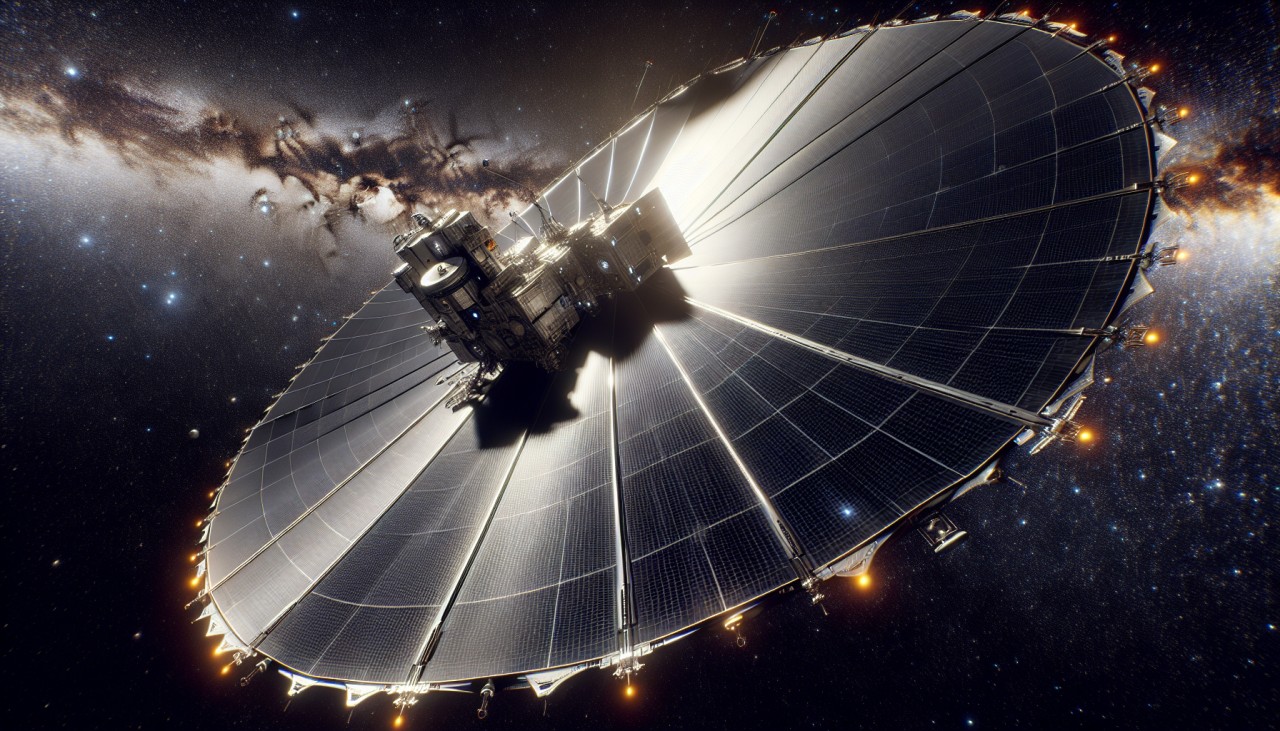
In April 2024, NASA launched the Advanced Composite Solar Sail System, a groundbreaking experiment aimed at reducing the high costs associated with space travel. Instead of relying on chemical fuel, this spacecraft utilizes a solar sail—a large metallic film that captures photons from the sun to maneuver and accelerate. The sail, which extends to 860 square feet, was successfully deployed in late August. Keats Wilkie, the principal investigator for the project, described the mission as a valuable opportunity for NASA to gain experience in controlling and operating a solar sail on a small scale. time.com
Similarly, the Solar Cruiser mission, scheduled for launch in 2025, aims to demonstrate the use of solar photons for propulsion in space. Once in orbit, the spacecraft will deploy an 18,000-square-foot sail—roughly the size of four regulation basketball courts stitched together—to catch solar radiation and propel the vehicle. Ball Aerospace has been selected to integrate and test the satellite bus with the solar sail system, marking a significant step in the advancement of solar propulsion technology. spacenews.com
Key Takeaways
- NASA's Advanced Composite Solar Sail System launched in April 2024.
- Solar Cruiser mission to demonstrate solar photon propulsion in 2025.
- Solar sails reduce reliance on chemical fuel for space travel.
- Large-scale solar sails can significantly propel spacecraft using sunlight.
- Advancements in solar sail technology are making space exploration more cost-effective.